
Microsoft Authenticator - Secure two-factor authentication
Secure your accounts with multi-factor authentication and easy sign-in.

- 6.2511.7533 Version
- 4.5 Score
- 110M+ Downloads
- Free License
- 3+ Content Rating


About Microsoft Authenticator
Microsoft Authenticator is a mobile security app for verifying sign-in attempts and protecting online accounts. Its main features include multi-factor authentication (MFA), passwordless sign-in, passkey authentication, and time-based verification codes.
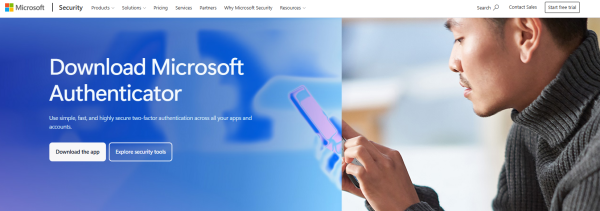
The app works with Microsoft personal, work, and school accounts. It also generates verification codes for third-party services that support authenticator-based two-factor authentication, including Google, Facebook, Amazon, Dropbox, LinkedIn, and GitHub.
Depending on the account and authentication method, users can approve sign-in requests through push notifications or enter six-digit time-based one-time passwords (TOTPs). Work and school accounts can also use organizational features such as device registration, certificate-based authentication, and single sign-on (SSO).
Key Features
Multi-Factor Authentication (MFA)
Verify sign-in attempts through push notifications or six-digit authentication codes. TOTP codes generally refresh every 30 seconds and can be used with third-party services that support authenticator apps. Multiple accounts can be stored in the same application.
Passwordless Sign-In
Sign in to supported Microsoft accounts without entering a password. After providing your username, approve the request on your phone and verify your identity using a fingerprint, facial recognition, or device PIN, depending on your account settings.
Passkey Support
Use passkeys to authenticate with compatible accounts and services. Instead of conventional passwords, passkeys use cryptographic credentials associated with supported devices. Authentication may require biometric verification or a device PIN.
Work and School Account Management
Add organizational accounts and approve authentication requests required by your workplace or educational institution. Supported features include certificate-based authentication and single sign-on (SSO) for compatible organizational applications and resources.
How to Set Up Microsoft Authenticator

Adding a Non-Microsoft Account
Microsoft Authenticator can generate verification codes for third-party services that support authenticator-based two-factor authentication.
Open Microsoft Authenticator and tap the plus (+) icon.
Select Other (Google, Facebook, etc.).
Open the security settings of the account you want to protect.
Find the two-factor authentication or authenticator app option.
Select the authenticator app method to display a QR code or setup key.
Return to Microsoft Authenticator and scan the QR code or enter the setup key manually.
Enter the six-digit code generated by the app on the website to complete the setup.
For Facebook, the relevant option is generally under Settings & privacy > Accounts Center > Password and security > Two-factor authentication. Menu names may vary by app version.
Once linked, the account appears in Microsoft Authenticator. Open it whenever the associated service requests a verification code.
Signing In with Verification Codes
When a website requests an authentication code, sign in with your account credentials first. Open Microsoft Authenticator, select the corresponding account, and enter its current six-digit code.
Each code expires after a short period, generally 30 seconds. If the service offers push notification approval or another authentication method instead, follow the instructions on its sign-in page.
Setting Up a Work or School Account
Open Microsoft Authenticator and tap the plus (+) icon.
Select Work or school account.
Sign in with your organizational credentials or scan the setup QR code provided by your organization.
Complete the required identity verification steps.
Register your device if prompted.
Some organizations require additional device registration or security configuration before granting access to internal resources. Contact your IT administrator if registration fails or your account cannot complete authentication.
Optional Access Permissions
Microsoft Authenticator uses device permissions for specific authentication and account setup functions.
Camera: Scans QR codes when adding accounts.
Notifications: Displays push requests for sign-in approval.
Location: May be required by organizations that enforce location-based access policies.
Biometric Authentication: Uses supported fingerprint or facial recognition features to verify identity during sign-in.
Permission requirements depend on the authentication methods you use and your organization's security policies.
How to Fix Microsoft Authenticator Not Working
If Microsoft Authenticator does not open, fails to display approval requests, or rejects verification codes, try the following solutions.
1. Update the App
Open the Google Play Store or Apple App Store, search for Microsoft Authenticator, and install any available updates.
2. Restart Your Phone
Restart your device and reopen the app to resolve temporary system or background process issues.
3. Check Notification Settings
If push approval requests are missing, make sure notifications are enabled for Microsoft Authenticator. Also check Do Not Disturb, battery optimization, and background activity restrictions.
4. Check Your Internet Connection
Push notification approvals require an internet connection. Switch between Wi-Fi and mobile data if requests are not arriving. TOTP codes, however, can generally be generated offline.
5. Correct Your Device's Date and Time
Incorrect system time can cause authentication codes to be rejected. Enable automatic date and time synchronization, then try entering a newly generated code.
6. Check Your Backup Before Reinstalling
Reinstalling the app may resolve persistent problems, but uninstalling it or clearing its data can remove locally stored authentication information. Before doing so, confirm that your accounts and credentials can be restored through an available backup or recovery method.
After restoring the app on a replacement device, work and school accounts may require additional sign-in and device registration. Keep your existing device available until authentication has been successfully configured on the new one.
FAQs
1. Can Microsoft Authenticator verify non-Microsoft accounts?
Yes. It generates six-digit verification codes for third-party services that support authenticator-based two-factor authentication, including Google, Facebook, Amazon, Dropbox, LinkedIn, and GitHub.
2. Do authentication codes work without an internet connection?
Yes. TOTP codes can generally be generated offline. However, push notification approvals and some account management functions require an internet connection.
3. Why does Microsoft Authenticator reject my verification code?
The code may have expired or your phone's clock may be inaccurate. Enable automatic date and time synchronization and enter the latest code before it expires.
4. Can I use Microsoft Authenticator without a Microsoft account?
Yes. You can add compatible third-party accounts and generate their verification codes without signing in with a Microsoft account.
5. Why am I not receiving sign-in approval notifications?
Check your internet connection, notification permissions, and background activity settings. If requests still do not appear, use another verification method offered on the sign-in page.
6. Can I transfer my accounts to a new phone?
Supported authentication credentials can be restored through a compatible backup, but not all account types transfer in the same way. Third-party accounts and eligible Microsoft personal accounts may be restored from backup. Work and school accounts generally require you to sign in and register the new device again. Contact your organization's IT administrator if you cannot restore access.
- Version6.2511.7533
- UpdateNov 17, 2026
- DeveloperMicrosoft Corporation
- CategoryBusiness
- Requires AndroidAndroid 8.0+
- Downloads110M+
- Package Namecom.azure.authenticator
- Signaturea398c970461da9814f7a4518b4869a53
- Available on
- ReportFlag as inappropriate
-
NameSizeDownload
-
57.51 MB
-
56.66 MB
-
56.66 MB










Allows you to log in to all your accounts very easy and fast
Works great to secure your Microsoft account or accounts if you have multiple
Sometimes the apple watch app loses sync with the mobile app
Can take a long time to authenticate on certain web pages