
ruqyah mp3 offline - Quranic protection & healing
Experience spiritual protection & healing with Quranic recitations for soothing the mind & body from negativity.

- 3.4 Version
- 1.6 Score
- 238K+ Downloads
- Free License
- 3+ Content Rating

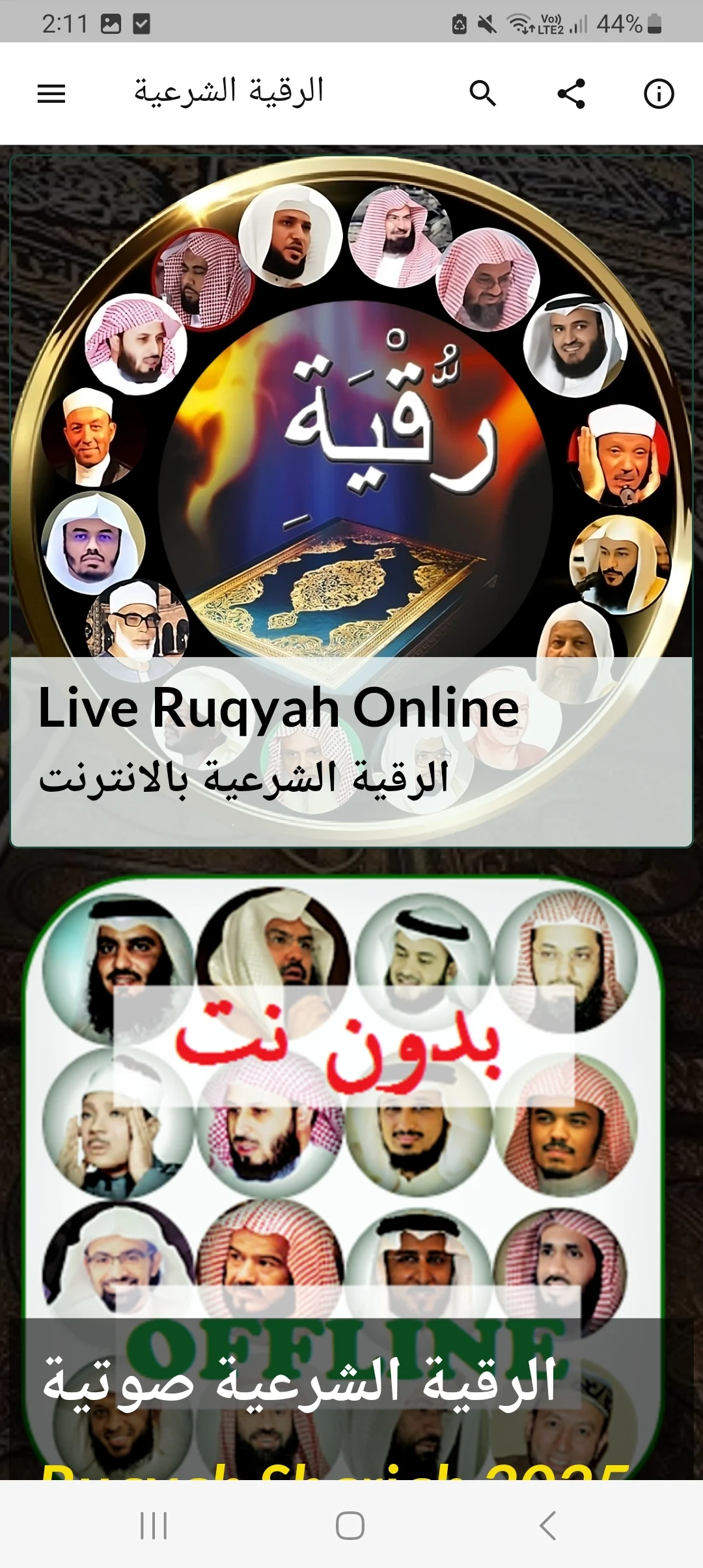
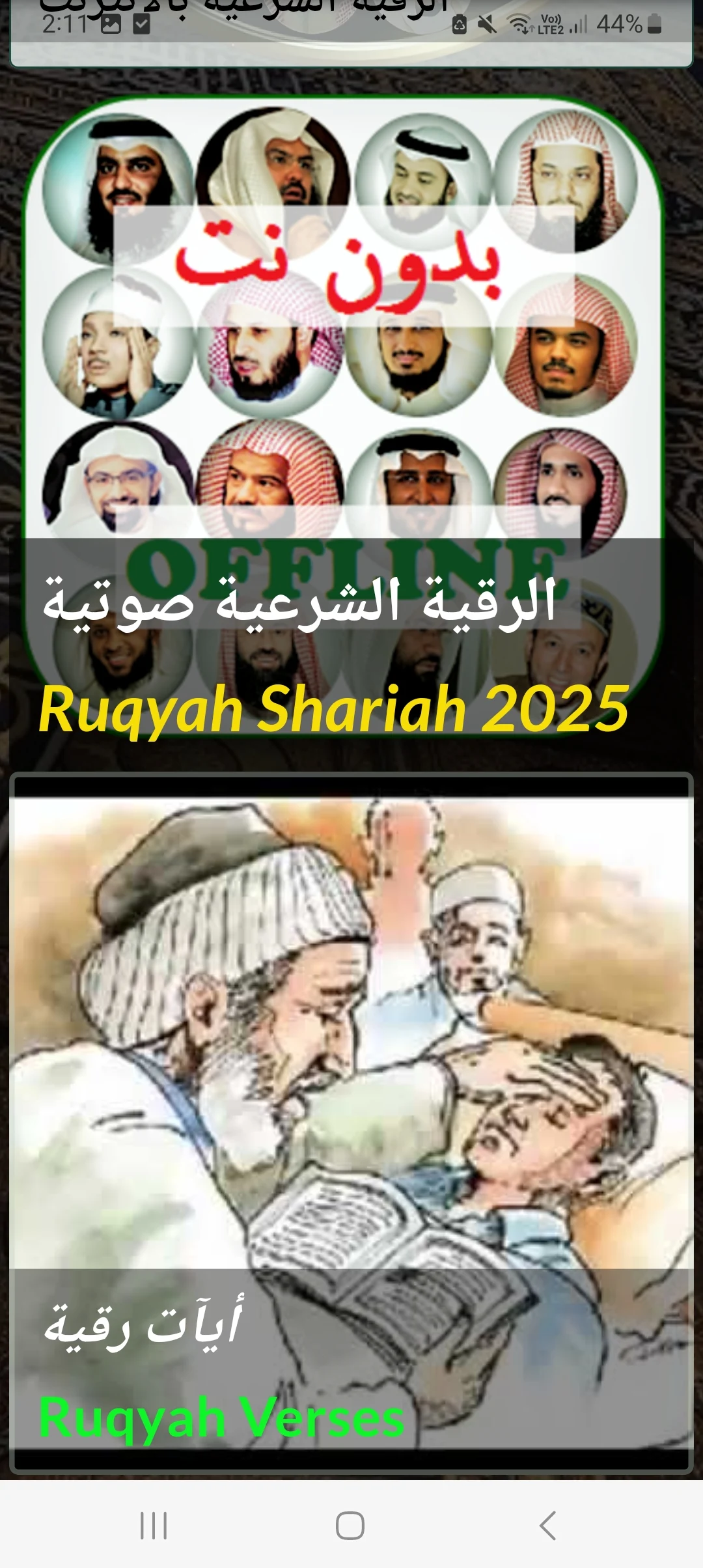
Ruqyah Shariah (الرقية الشرعية) refers to a compilation of verses and brief chapters from the Quran intended for safeguarding individuals.

It serves as a defense against Black Magic, Jinn, Witchcraft, Sorcery, and the Evil Eye.
In Islam, Ruqyah involves reciting the Qur'an, invoking refuge, remembering Allah, and making supplications to address illnesses and various difficulties.
Requirements for performing Ruqyah Ash Shar'ee:
1.The recitation must include the words of Allah, along with His names and attributes or those of His Messenger (peace be upon him).
2.It should be articulated in Arabic, or its meanings can be expressed in other languages.
3.One must understand that Ruqyah alone holds no intrinsic power; instead, healing comes solely from Allah.
4.Ruqyah should not be done while in a state of major impurity (junub) or in locations where worship is prohibited, such as graveyards or restrooms.
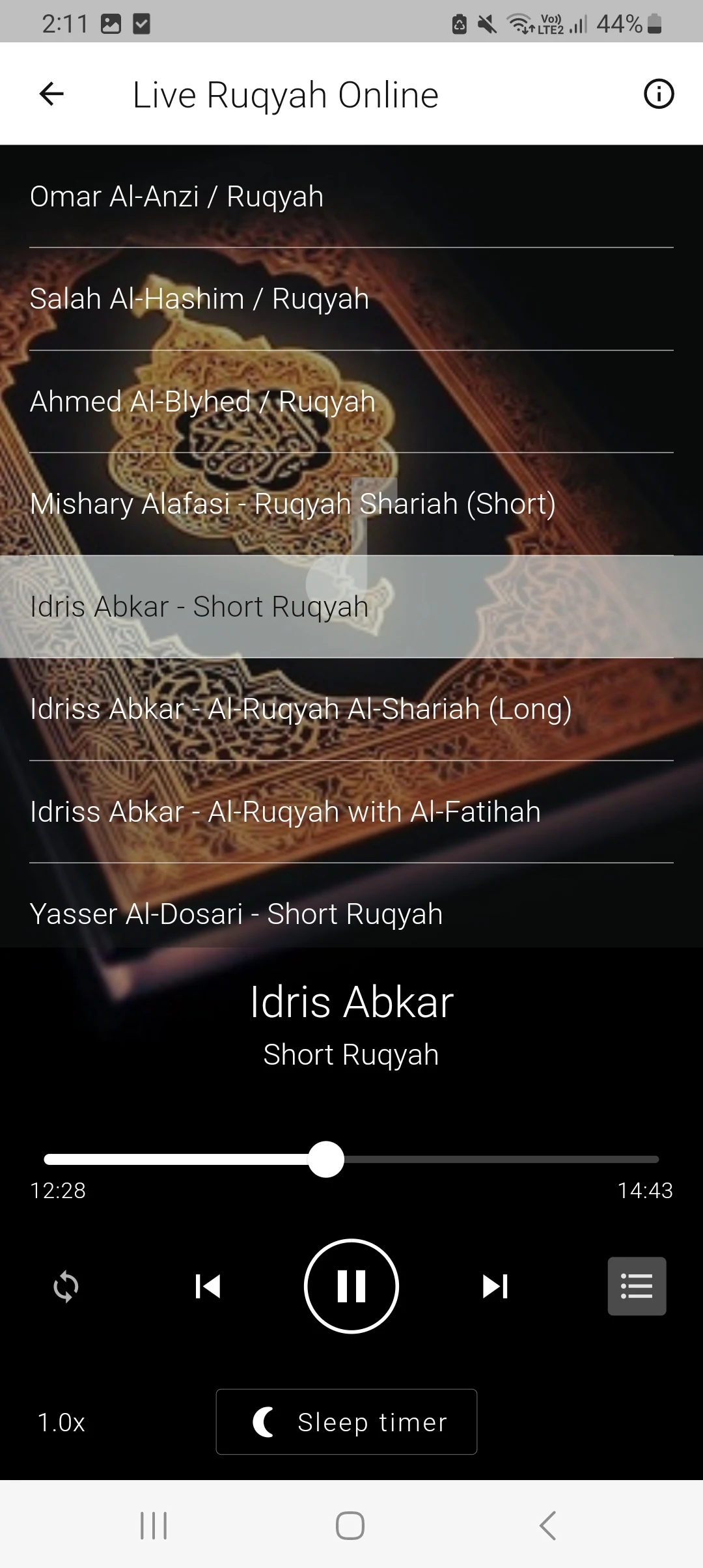
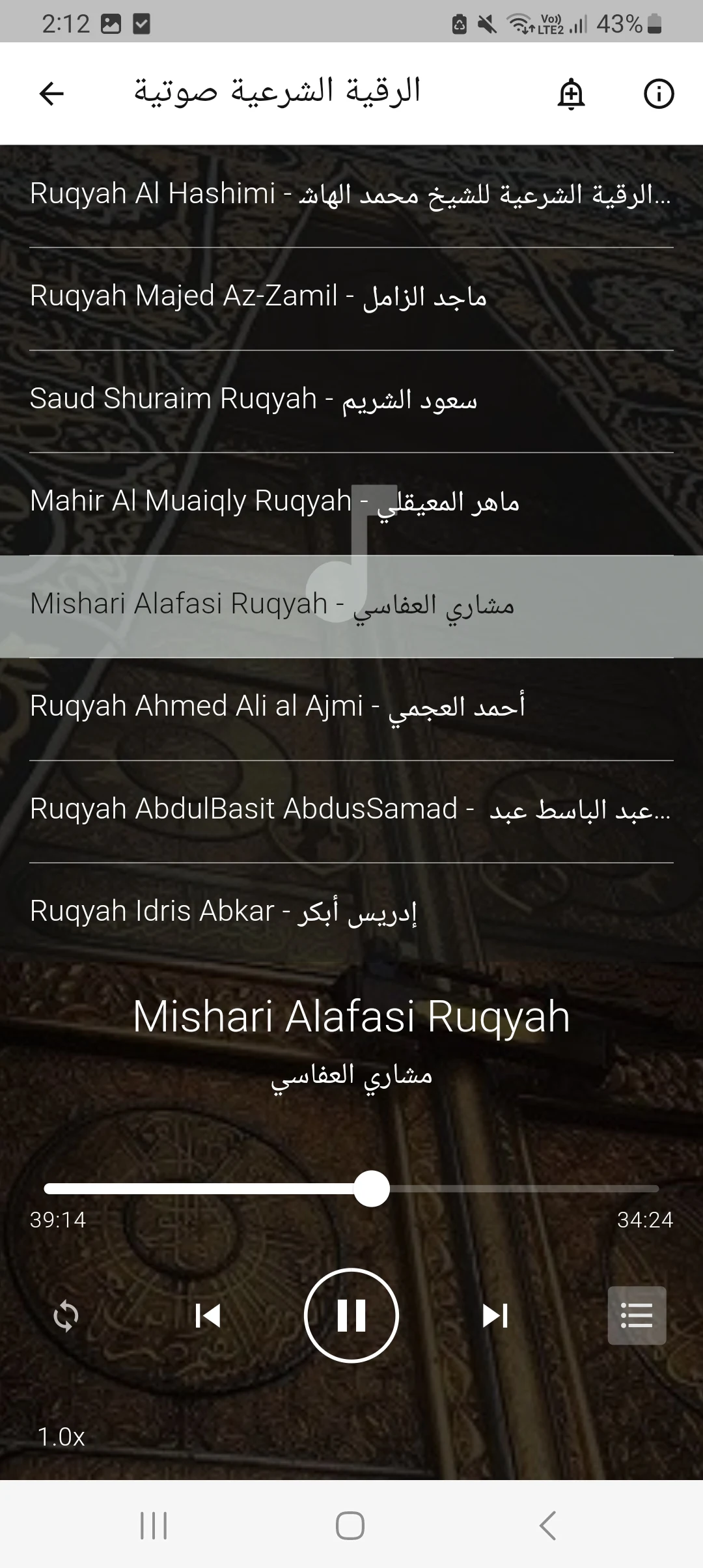
This app features Ruqyah Al Shariah recited by:
Sheikh Abdurrahman Al Sudais
Ruqyah Al Hashimi
Nasir Al Qatami
Ahmed Al Ajmi
Saad al Ghamidi
Mishary Rashid Al Afasy
Idris Abkar
Mansoor Salmi
Yasser Al Dosari
Khalid Al Qahtani
Khalid Al Habashi
Nabil Al Awdi
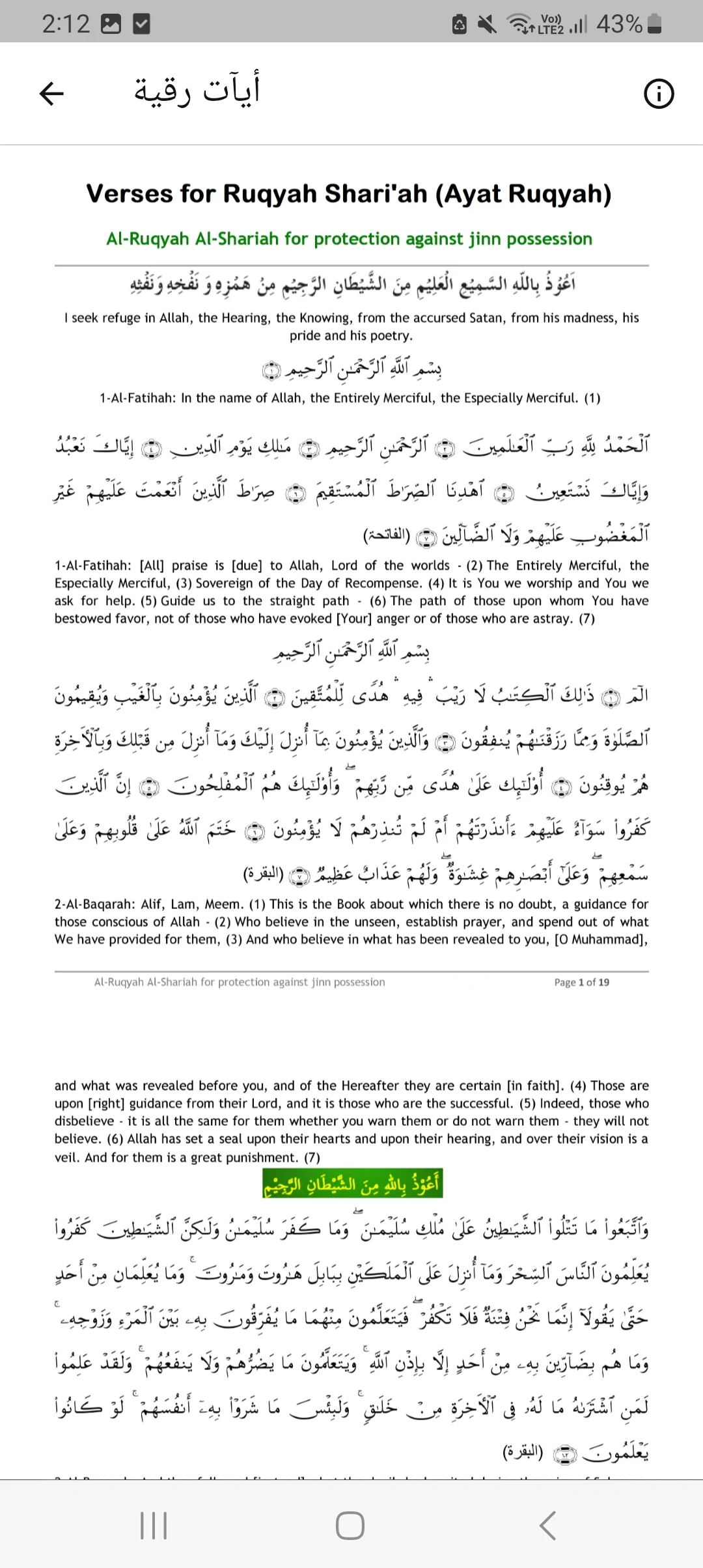
There are 33 verses from the Quran that address the impacts of Magic and offer protection from Satan, malevolent Jinn, thieves, and dangerous creatures (as noted by Shah Wali-ullah (RA): AlQawlul-Jameel).
The Manzil includes the following Quranic passages organized as such:
Surah Al-Fatihah (Chapter 1): Seven complete verses
Surah Al-Baqarah (Chapter 2): Verses 1 to 5, 163, 255 - 257, and 284 - 286
Surah Al-Imran (Chapter 3): Verses 18, 26 & 27
Surah Al-A’raf (Chapter 7): Verses 54 - 56
Surah Al-Isra (Chapter 17): Verses 110 & 111
Surah Al-Mu’minun (Chapter 23): Verses 115 to 118
Surah As-Saffat (Chapter 37): Verses 1 to 11
Surah Ar-Rahman (Chapter 55): Verses 33 to 40
Surah Al-Hashr (Chapter 59): Verses 21 to 24
Surah Al-Jinn (Chapter 72): Verses 1 to 4
Surah Al-Kafiroon (Chapter 109): Verses 1 to 6
Surah Al-Ikhlas (Chapter 112): Verses 1 to 4
Surah Al-Falaq (Chapter 113): Verses 1 to 5
Surah An-Nas (Chapter 114): Verses 1 to 6
This entire Manzil is recommended to be recited once or three times in a single session, potentially performed once or twice each day—once in the morning and once in the evening.
This audio Ruqyah application allows users to listen to the recitations by various Qaris. Engaging with these verses enhances both protection and healing. Memorizing the Manzil Ruqyah verses is highly beneficial. Please remain mindful of the prerequisites prior to undertaking Ruqyah.
App Experience
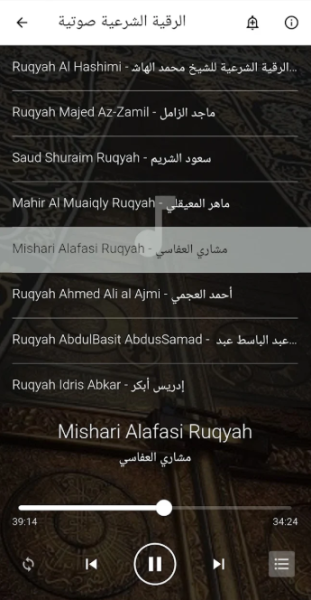
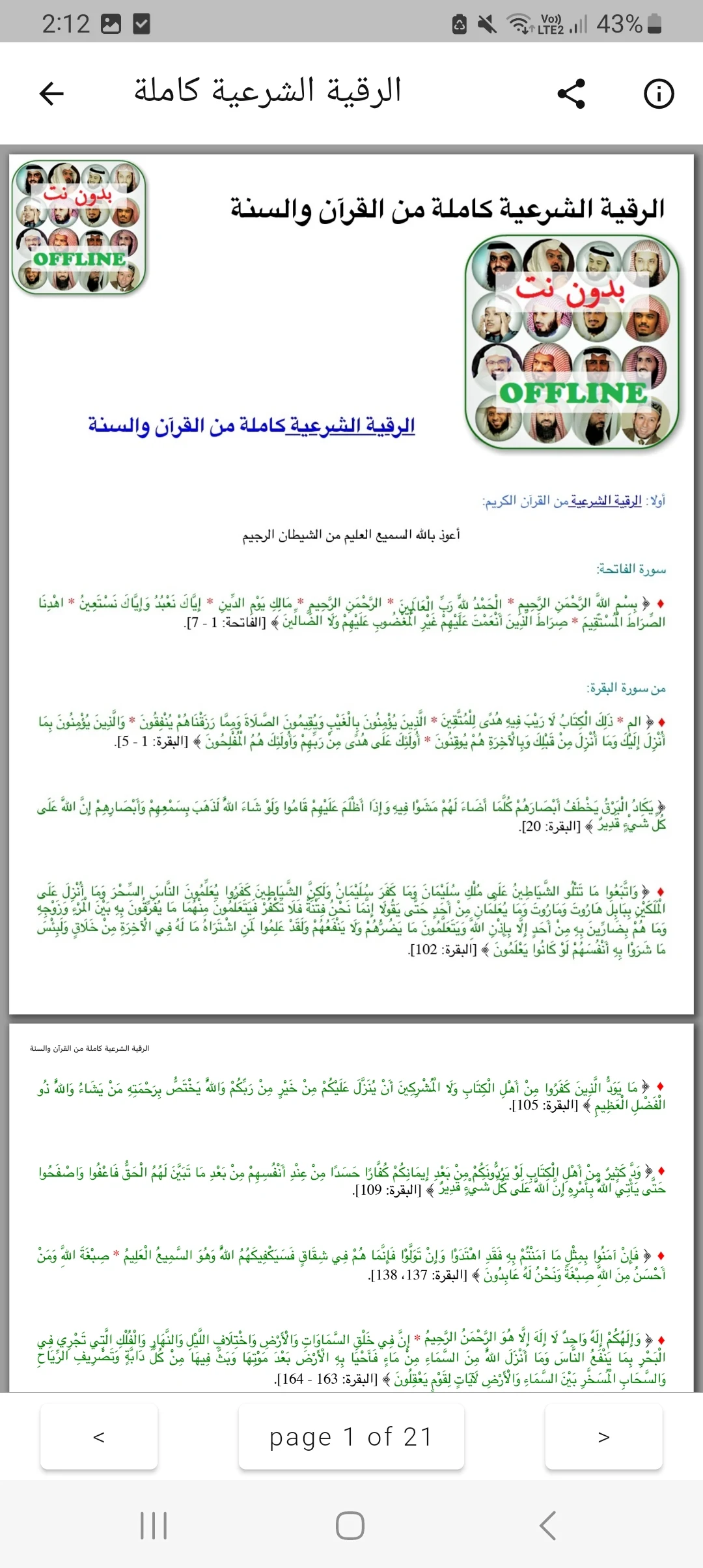
This Ruqyah Shariah app offers professional and practical content, including audio versions from several renowned reciters, covering complete passages from the Manzil, catering to diverse recitation preferences. It's user-friendly, allowing users to directly listen to the audio or recite the text independently, with suggested recitation methods and frequency guidelines. The app is free of unnecessary distractions, with clearly defined core functions, making it suitable for daily spiritual practice and quick access when needed—a convenient tool tailored to the needs of believers.
FAQ
1. **Is Ruqyah Shariah only reciting in Arabic? **
Not necessarily. While the Quran is traditionally recited in Arabic, its meaning can also be expressed in other languages. The key is to sincerely pray for Allah's protection, not just the form of words.
2. **When is it inappropriate to recite Ruqyah? **
It should not be performed when in a state of significant uncleanness (such as junub) or in places where prayer is prohibited (such as cemeteries or toilets). It should be performed in a clean environment and condition.
3. **Does the Manzil in the app need to be recited at a fixed time each day? **
It is recommended to recite once in the morning and evening, 1-3 times each time, but there is no strict time limit. The key is to maintain regularity and focus, and you can arrange it according to your personal needs.
4. **Is listening to the audio in the app the same as reciting it yourself? **
The key lies in inner faith and sincerity. Listening to audio can aid learning or be used when it's inconvenient to recite in person, but reciting the verses in person and understanding their meaning can deepen your connection to the faith.
5. **What are the special benefits of Memorize Manzil?**
Once you've memorized them, you can recite them whenever you need them. For example, when you encounter difficulties or feel uneasy, you can quickly turn to the verses for peace of mind and protection, strengthening your confidence to face difficult situations.
6. **Can Ruqyah replace medical treatment?**
No. Islam considers Ruqyah to be a prayer of faith, while physical illnesses require medical treatment. The two are not contradictory and should be addressed equally.
7. **Are there any differences in the recitation of different Qaris?**
The main differences are in the recitation style, speed, and pitch, while the core text remains the same. Choose the version that is comfortable for you and helps you focus. The effectiveness of the verses depends not on the person reciting them but on your own devotion.
8. **Do I have to recite all 33 anti-magic verses in the app?**
No. You can choose to recite the whole or in sections according to time and needs. The focus is to have reverence and believe in Allah's protection, rather than mechanically completing the number.
- Version3.4
- UpdateOct 16, 2026
- DeveloperKareemTKB
- CategoryMusic & Audio
- Requires AndroidAndroid 4.1+
- Downloads238K+
- Package Namecom.andromo.dev391844.app813825
- Signaturec18b1749e6f1f3a85d093a8392a47c97
- Available on
- ReportFlag as inappropriate
-
NameSizeDownload
-
99.48 MB
-
86.53 MB
-
86.45 MB


















The content is standardized and organized based on Islamic teachings, including authoritative texts and recitation requirements, suitable for believers.
Audios from several renowned reciters are provided, allowing users to easily choose their preferred recitation style, facilitating learning and practice.
The recitation requirements and methods are clearly outlined, lowering the barrier to entry and helping users perform the ritual correctly.
Relying on audio, the lack of textual annotations or translations can hinder a deeper understanding of the meaning of the scriptures.
Specific application guidance for different scenarios (such as emergencies) is lacking, and practical details could be improved.