
Envia - Shipping labels & quotes
Streamline your e-commerce with effortless shipping label creation & global carrier integration for seamless deliveries

- 4.2.15 Version
- 1.1 Score
- 352K+ Downloads
- Free License
- 3+ Content Rating

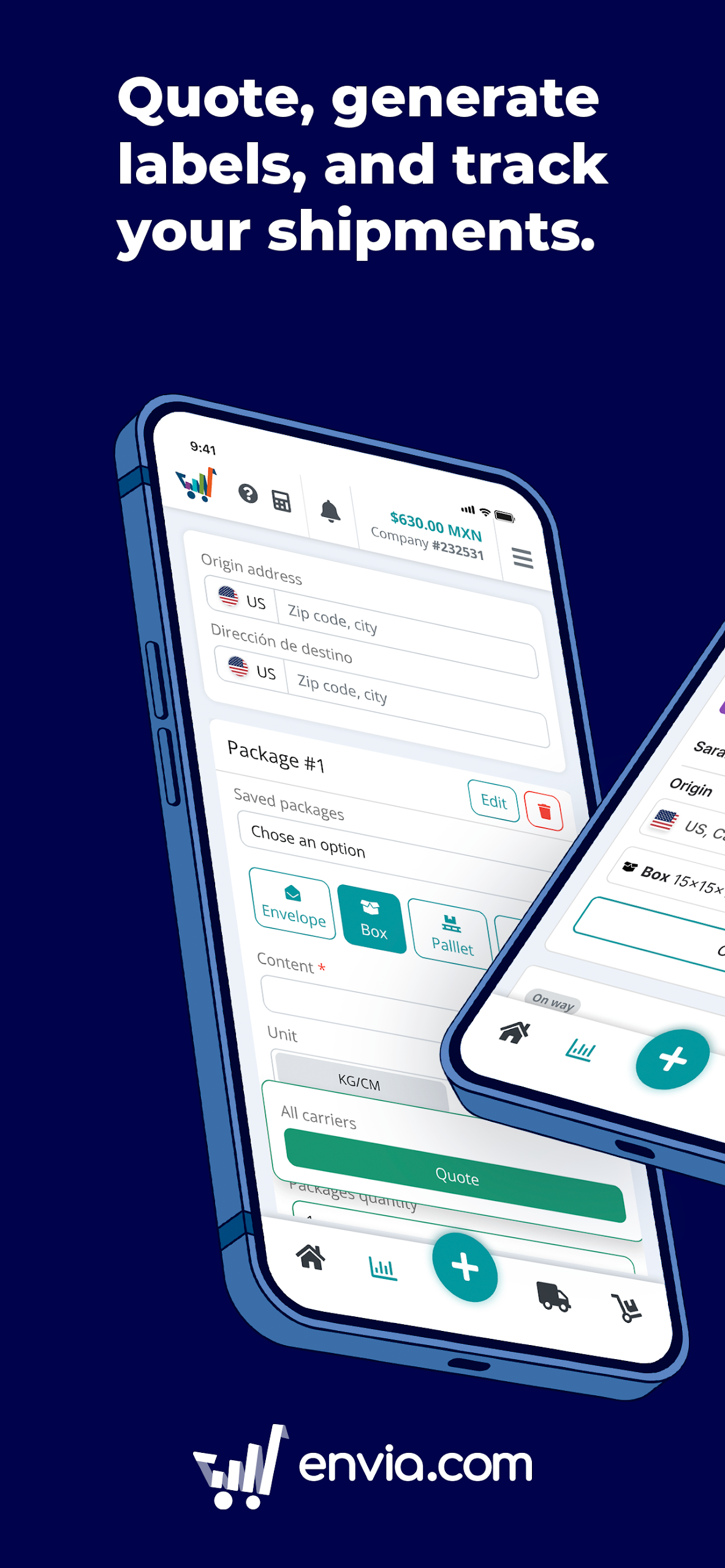
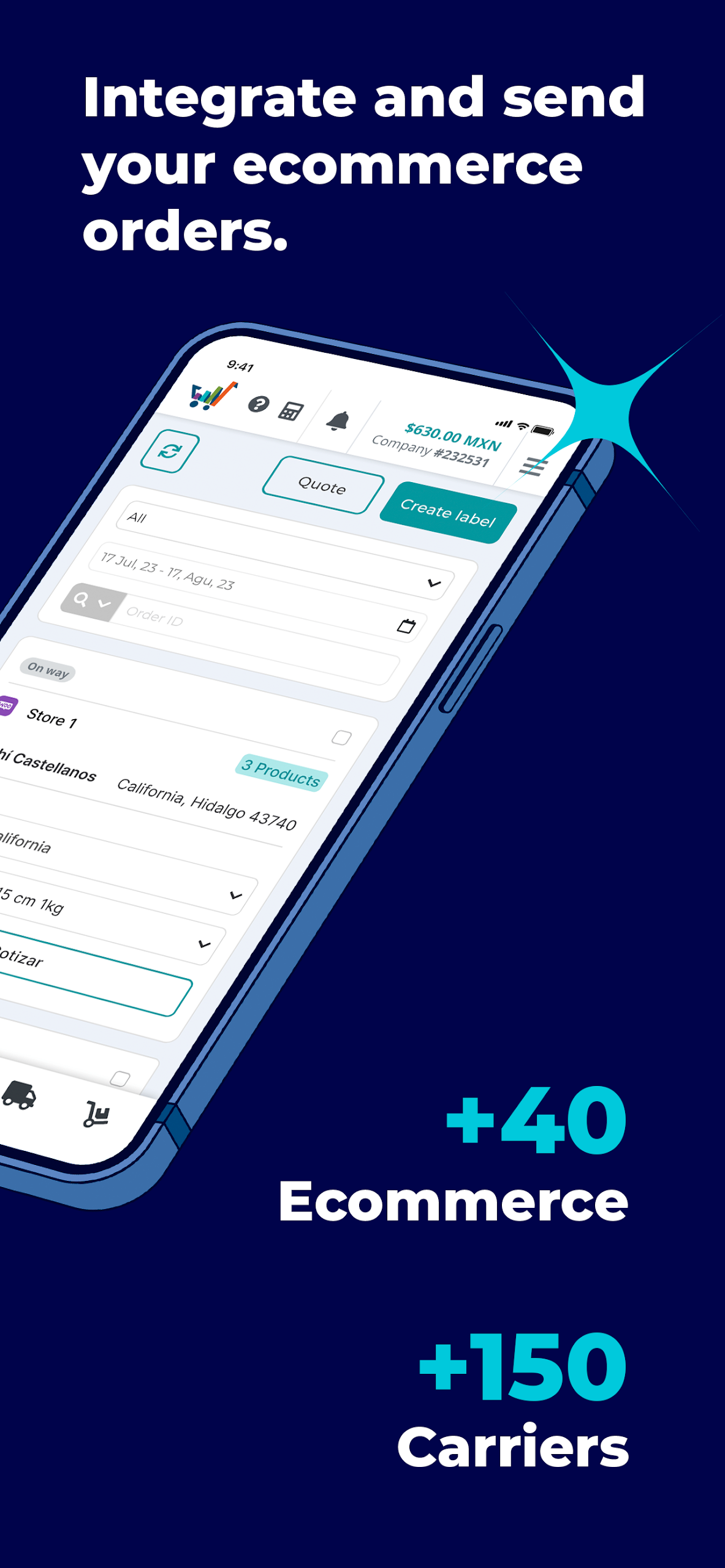
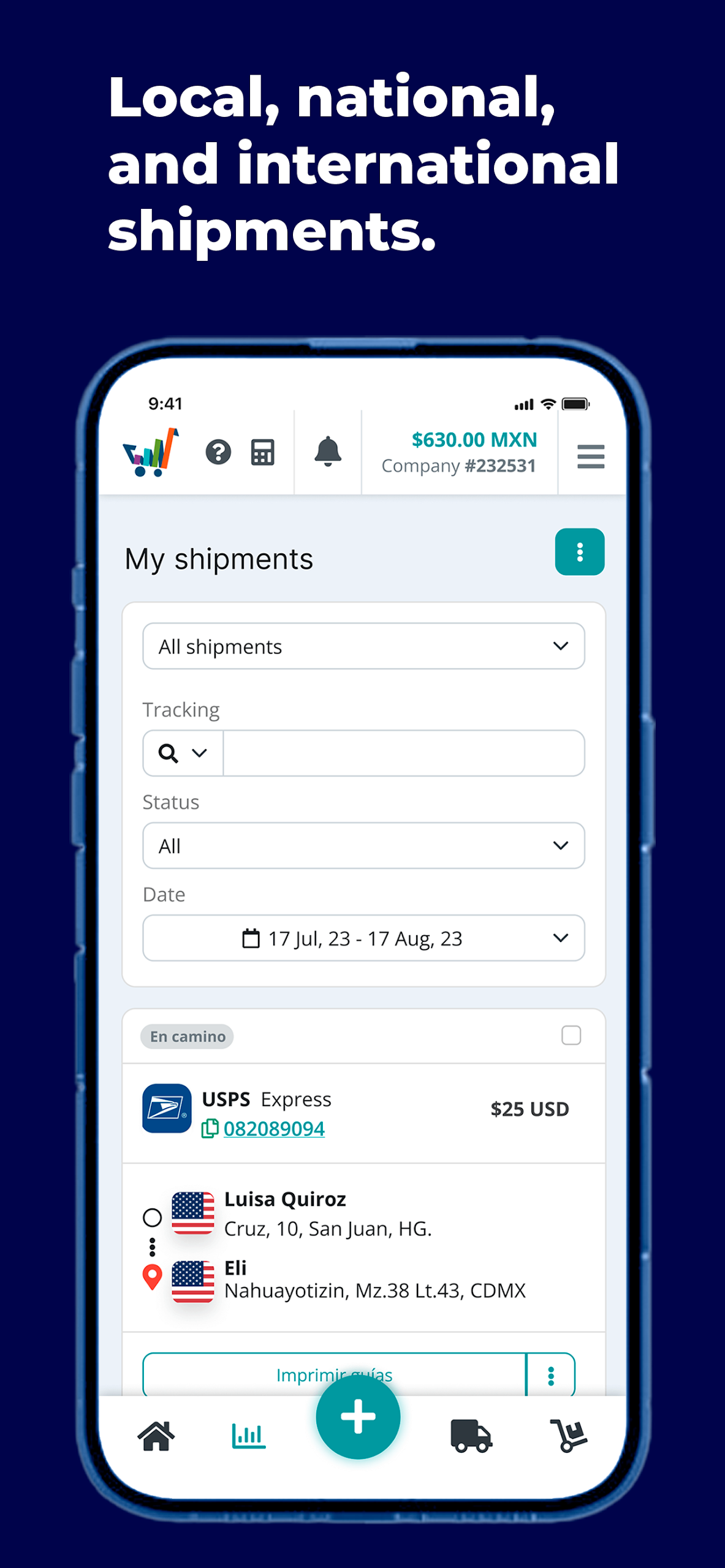
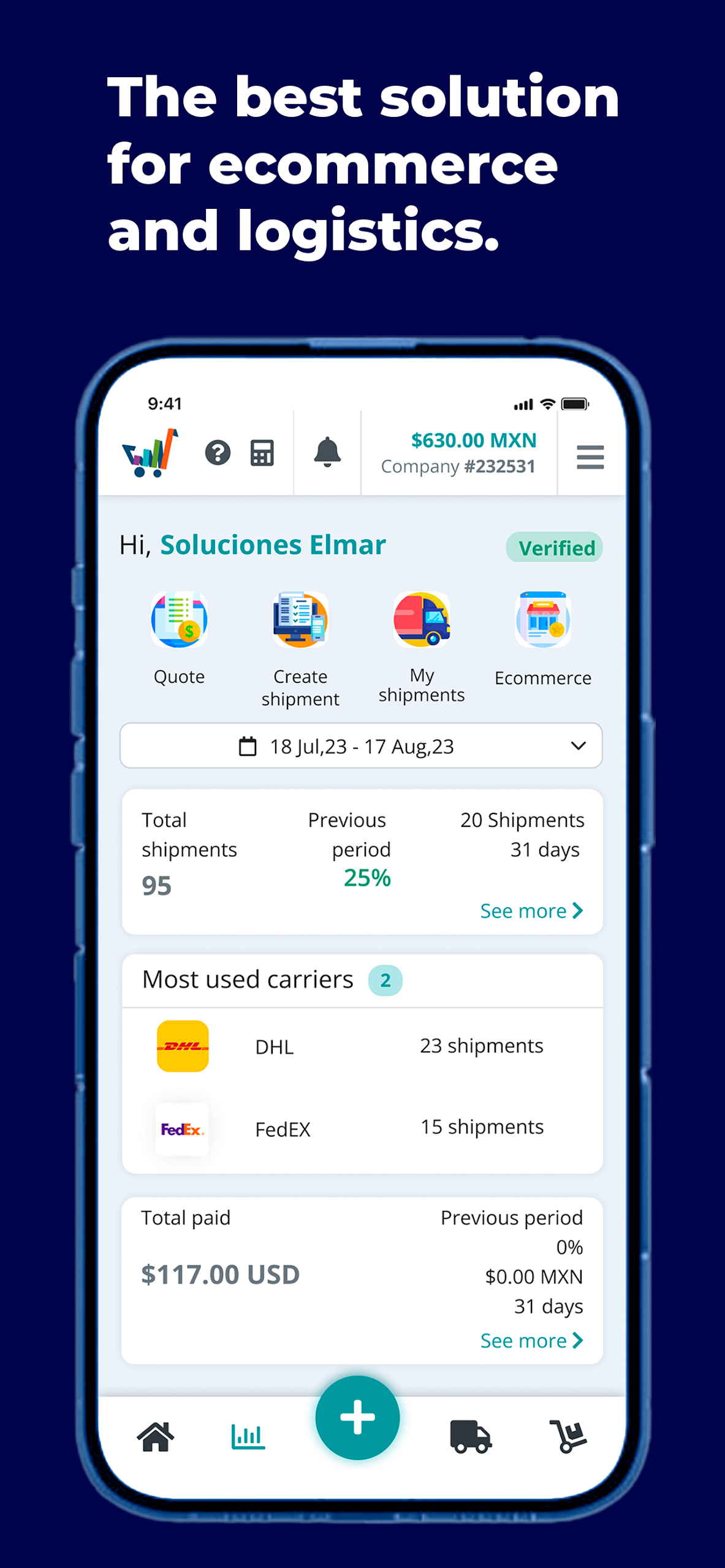
Shipping APP for E-commerce. Easily obtain quotes, generate, and print shipping labels using top carriers globally. Link your e-commerce with USPS, UPS, DHL, FedEx, LSO, and others.
Currently, our shipping services are available in the following countries:
USA, India, Canada, Mexico, Colombia, Chile, Brazil, Guatemala, Argentina, and more.
We provide integrations with all major e-commerce platforms, such as Shopify, Wix, Ecart, WooCommerce, PrestaShop, Mercadolibre, Amazon, eBay, and more.
Envia serves as a multi-carrier shipping solution for domestic and international deliveries. All shipments are insured against loss or theft, and options for credit and financing are also available if required.
Why create an Envia.com account?
Quote with multiple parcels instantly.
Send domestic and international shipments from a single account.
Access flexible payment methods and customized business plans.
Manage your shipments easily in a single panel.
Options to create your account
Direct registration on Envia.com
Login to envia.com
Click Register for free
Complete the form with your data:
Active e-mail
Valid phone number
Verify your email by clicking on the link received.
Log in and verify your phone number by entering the code sent by SMS or Whatsapp.
Registration at the invitation of an executive
Your Envia.com executive will send you a personalized link (ex. https://ship.envia.com/salesman/XXX).
Click on the link.
Complete the form following the same steps of the direct registration.
ℹ️ If you do not use your executive's link, any exclusive promotions or benefits he/she has shared with you will not be applied.
Recommendations
Use a permanent mail and telephone to avoid access problems.
For companies: it is recommended to use a generic corporate mail (e.g. logística@empresa.com) instead of that of a specific collaborator, in order to maintain continuity.
FAQ
What should I do if I do not receive the SMS verification code?
Request it by WhatsApp as an alternative.
Remember: Codes expire in 2 hours. If you have already registered your email, try logging in to generate a new one.
What should I do if I do not receive the verification code by e-mail? If you do not receive the verification email, it could be because your inbox is full and you are not receiving the emails for this reason. Please check how to manage your storage.
I cannot create an account, what should I do?
If it tells you that the account already exists, it is because the registration has already been completed, but you still need to complete it. Log in to complete the registration. You will be prompted to enter your phone number and country.
“Something went wrong” = if more than 5 requests are made within 10 minutes, the IP will be blocked for 24 hours.
Why am I being asked to update my password?
If the system prompts you for a password, you may have registered using the Google button. We recommend that you log in using that same button.
What is two-factor authentication (2FA)?
Two-Factor Authentication (2FA) is a security system that requires two logins, providing an extra layer of security to ensure exclusive access to your account, even if someone knows your password.
Consult this resourcefor more information.
From Checkout to Doorstep: The Future of e-commerce Delivery
E-commerce delivery is the frontline of customer experience, and it continues to evolve to meet customer expectations. Future-proofing the entire delivery journey, from checkout to doorstep delivery, is crucial for enhancing customer experience, building trust, and improving conversion and customer loyalty. Here’s how e-commerce entrepreneurs are doing it.
How Businesses are Future-Proofing the Delivery Journey
E-commerce platforms for drop-shipping are redefining delivery logistics with technologies that enable faster, greener, and more reliable e-commerce courier networks across different stages.
Stage 1: Checkout
While checkout is often considered the final step in the customer’s journey, it is also the first stage of the delivery process. It is the most crucial one as well as this is where interest is converted into actual sales. A well-designed checkout process minimizes uncertainty while building trust, and maximises conversions, while a poorly executed one leads to high cart abandonment rates.
Personalizing the checkout process can enhance upselling opportunities. Offerings, such as encrypted checkout pages, voice-based and chat-assisted checkout, secure guest checkout options and payment gateways, accelerated checkout solutions, clear delivery options, and real-time shipping rates and estimates that cater to individual preferences, together redefine this stage, making it a key differentiator in e-commerce.
Stage 2: Fulfilment & Warehousing
The core components of e-commerce, fulfilment and warehousing, directly impact delivery speed, customer satisfaction, and operational efficiency. Businesses are rethinking their strategies and transforming warehousing beyond static storage, into dynamic, tech-driven hubs to support high-volume, fast-paced order processing.
Adopting a distributed model is another way to create a more agile and resilient delivery network. Traditional, large-scale distribution centres are now replaced by smaller or micro fulfilment centres located closer to the delivery zones or clusters. Additionally, localized sorting and fulfilment centres equipped with AI-automated technology enable efficient inventory management, precise stock control, and fewer stockouts.
Stage 3: Logistics Network
A well-designed logistics network ensures the packages are transported efficiently, cost-effectively, and reliably across the globe. This depends on how well its components (factories, warehouses, and fulfilment centres) are optimized. E-commerce shipping platforms that offer real-time visibility into inventory, vehicle tracking, and delivery, and automation and robotics are transforming warehouse operations, while route optimization and predictive analytics improve transportation efficiency and responsiveness to disruptions before the customers are affected. Collaborative shipping, where multiple brands, especially small and mid-sized sellers, share trucking or container space, has proven efficient in reducing cost and waste, too.
Stage 4: Last-Mile Delivery
This stage is the most expensive, logistically challenging, and most critical part of the delivery journey. It directly affects customer satisfaction, making visibility, speed, and reliability crucial. E-commerce delivery companies are implementing innovative solutions, such as smart batching algorithms, crowd-sourced delivery, autonomous delivery robots, drone-based drops, electric bike fleets, etc., in this space to optimize delivery. These solutions enable companies to offer flexible delivery options, such as next- or same-day delivery and late-night pickups, hyperlocal mapping, dynamic delivery windows, and smart parcel lockers to reduce delivery friction.
It is important to balance cost and efficiency at this stage. Low package density per route often leads to higher fuel and labour costs and extended ETA per delivery. Companies are adopting route optimization software, AI-powered dispatching, and real-time data to overcome these issues. Automation and robotics in sorting facilities also support faster processing, ensuring parcels leave hubs quickly and accurately.
- Version4.2.15
- UpdateMar 17, 2026
- DeveloperEnvia
- CategoryProductivity
- Requires AndroidAndroid 6+
- Downloads352K+
- Package Namecom.enviaclientapp
- Signaturec0fd367537f8ebd0edb88e6879284ad8
- Available on
- ReportFlag as inappropriate











Low shipping prices for small businesses
User-friendly interface and easy navigation
Excellent customer support and timely issue resolution
Compatibility with various platforms (e.g., WIX)
Seamless integration for online stores
Real-time tracking feature available
Quick pickup and delivery services
Good experience reported by long-term users
Poor customer support and response times
High incidence of lost or delayed shipments
Inconsistent service quality and reliability
Unclear refund policy for canceled shipments
Charges for overweight shipments can be unjustified
Lack of direct contact numbers for customer service
Automation in customer support leads to robotic responses
Customer complaints often go unresolved or ignored
Issues with COD payments not being processed in time