
Marbel Belajar Sayur - Learn vegetables & spelling
Introduce your kids to vibrant vegetables through fun games & engaging activities that promote learning & creativity!
- 3.0.5 Version
- 1.7 Score
- 215K+ Downloads
- In-app purchases License
- 3+ Content Rating

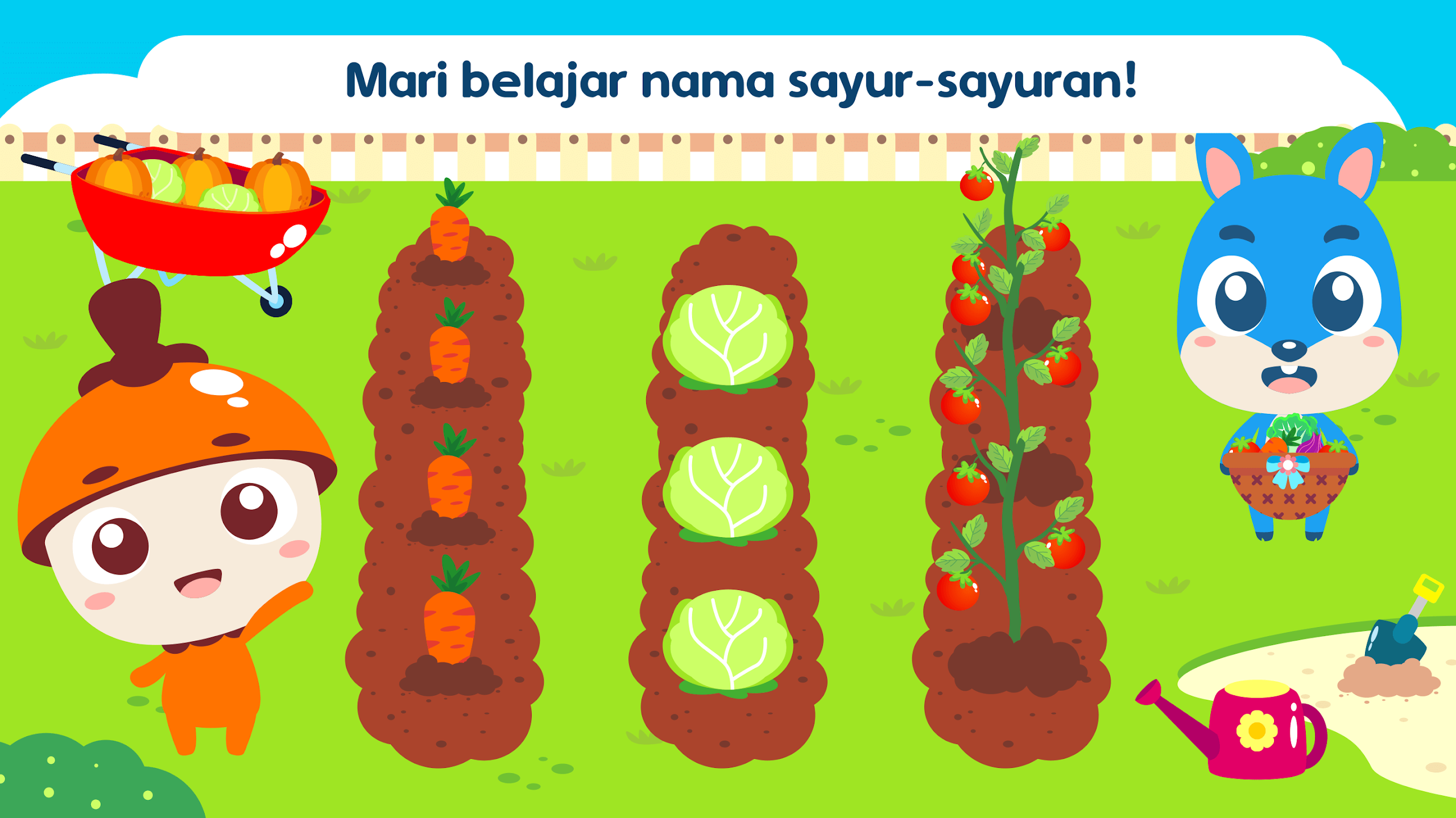
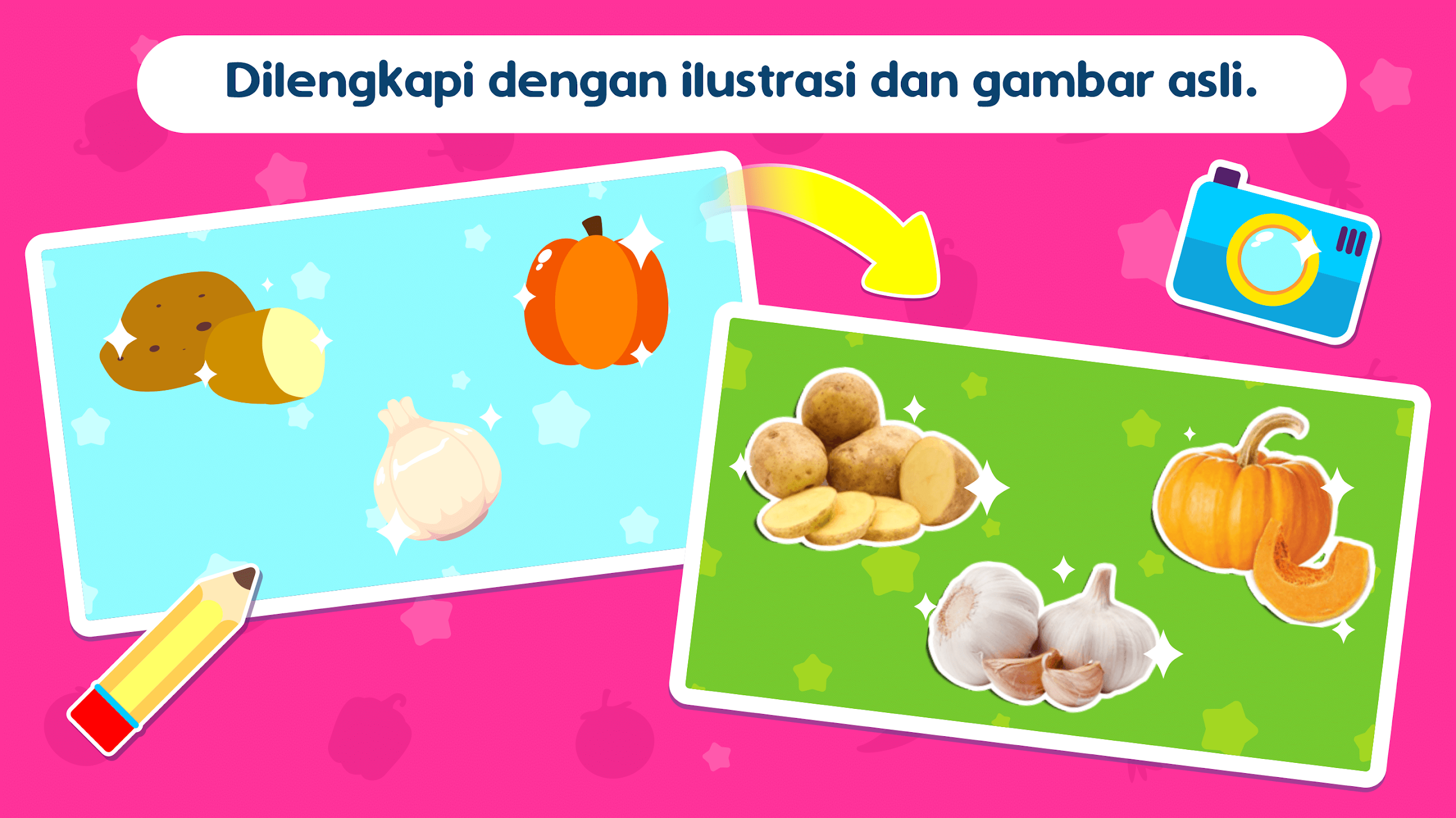
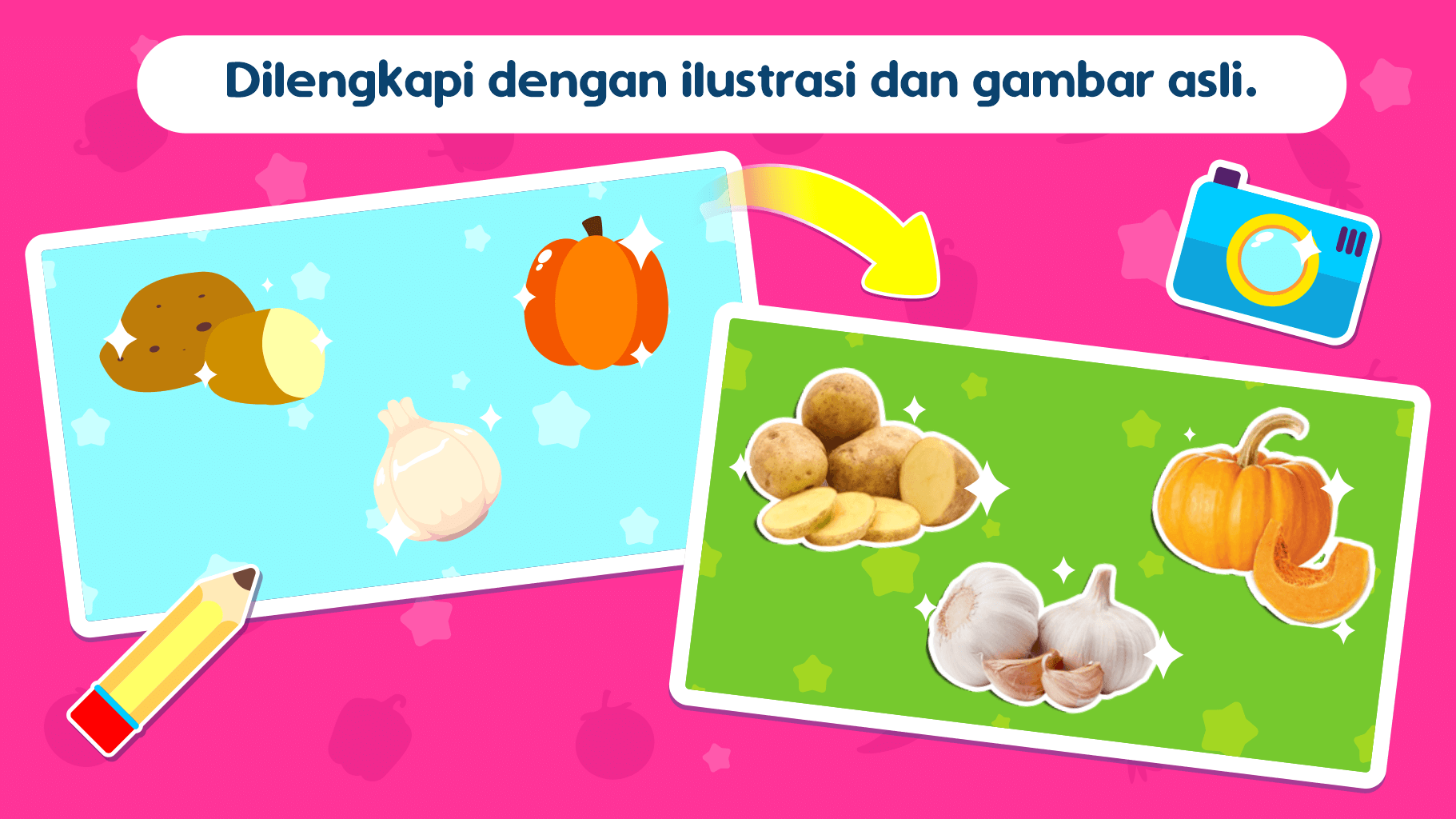
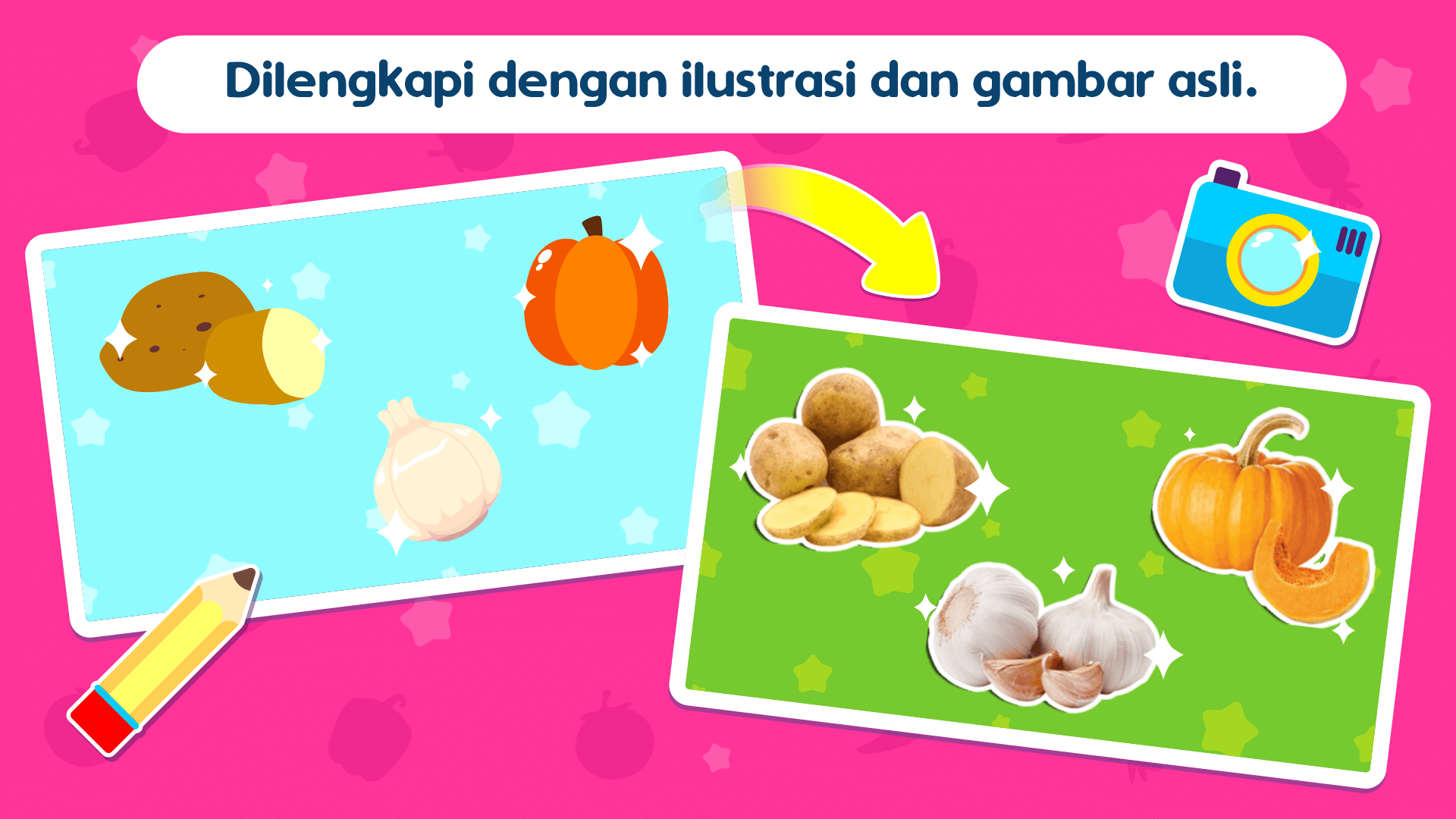
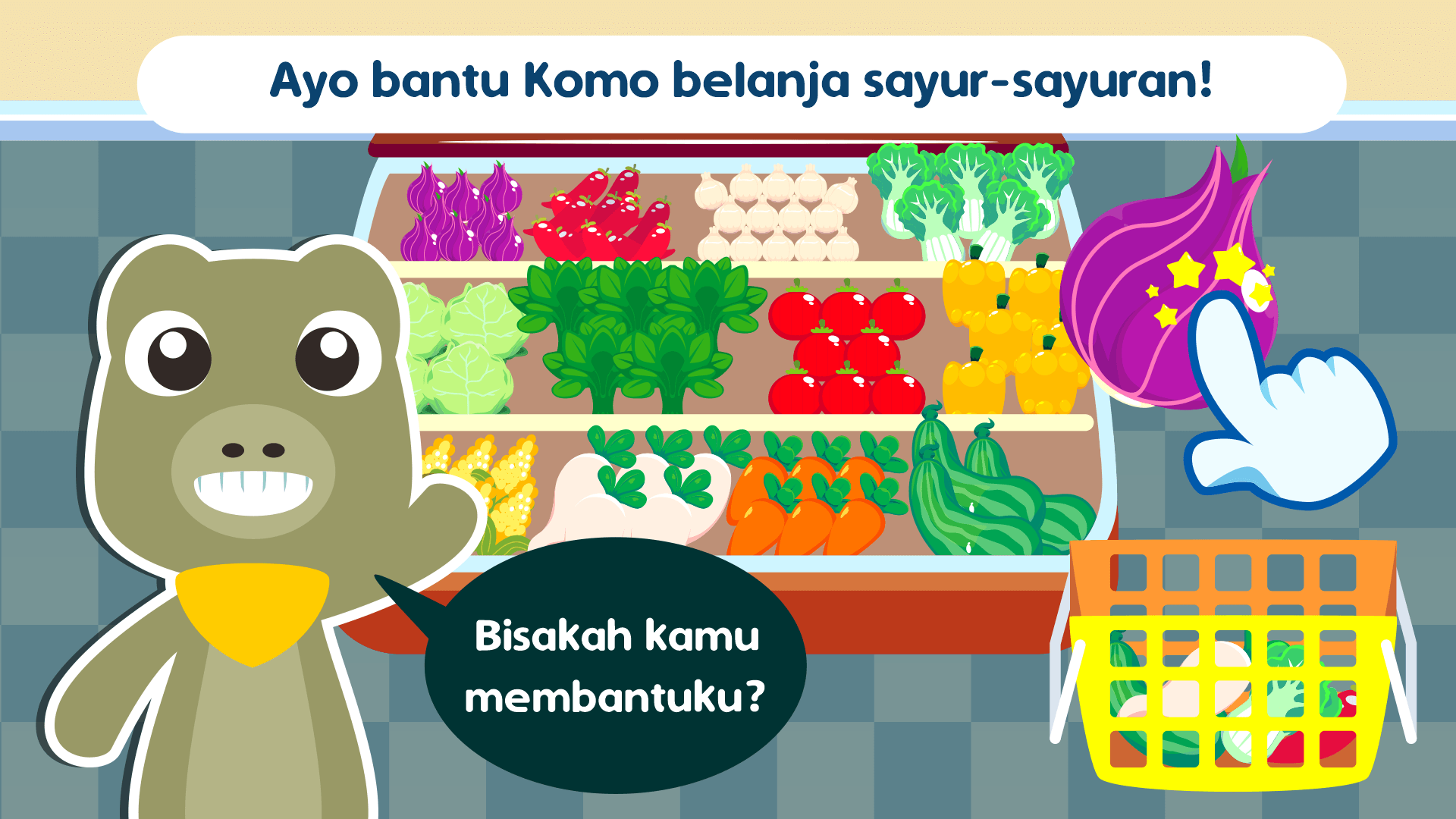
Vegetables are an essential source of various vitamins, minerals, and fiber. Therefore, it is important for all children to enjoy vegetables to maintain good health!
The MarBel 'Learn Vegetables' app is specifically designed for children between 2 and 6 years old. This application introduces kids to different types of vegetables in a fun and engaging manner!
FUNCTIONS:
LEARN VEGETABLES
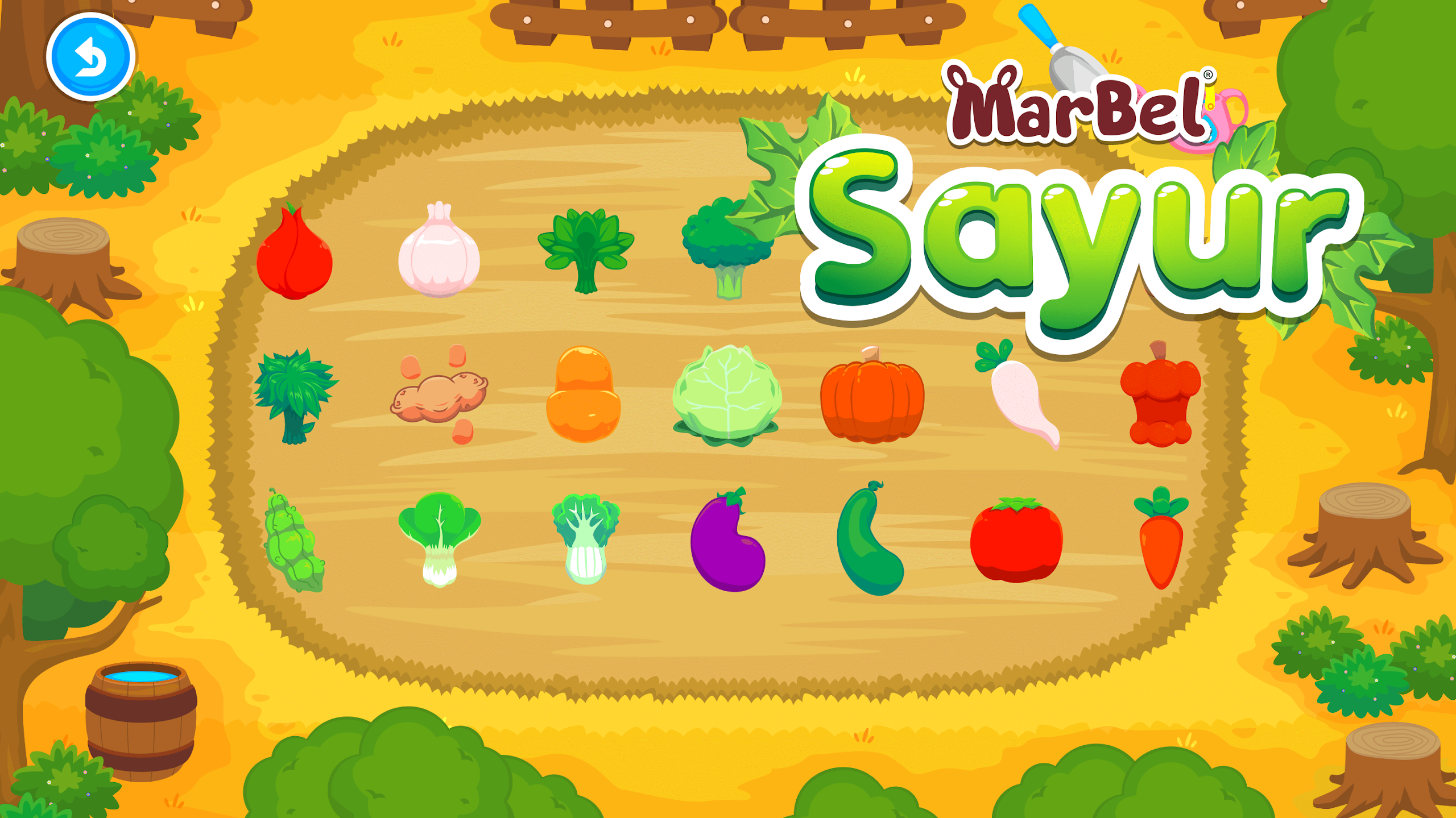
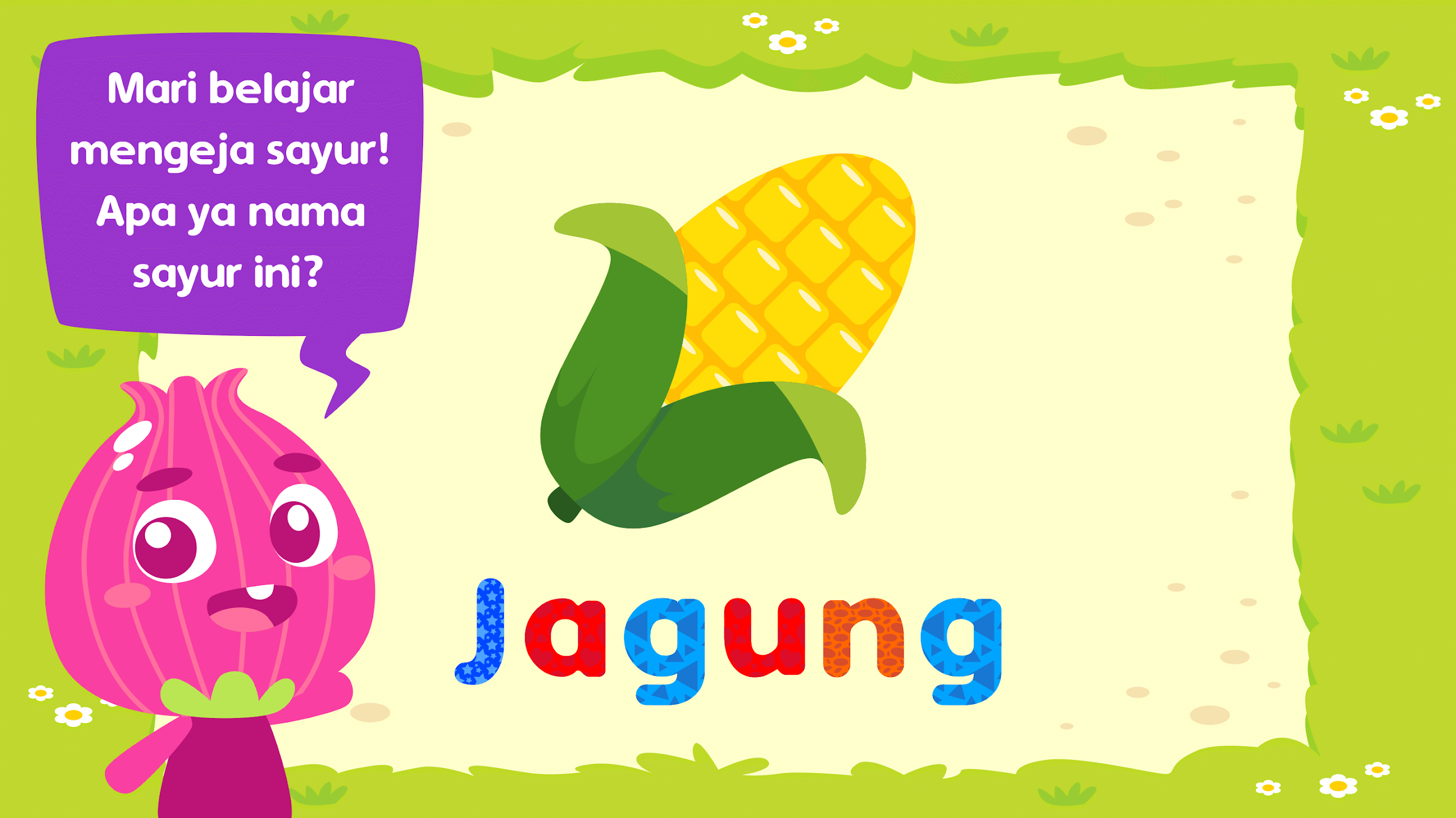
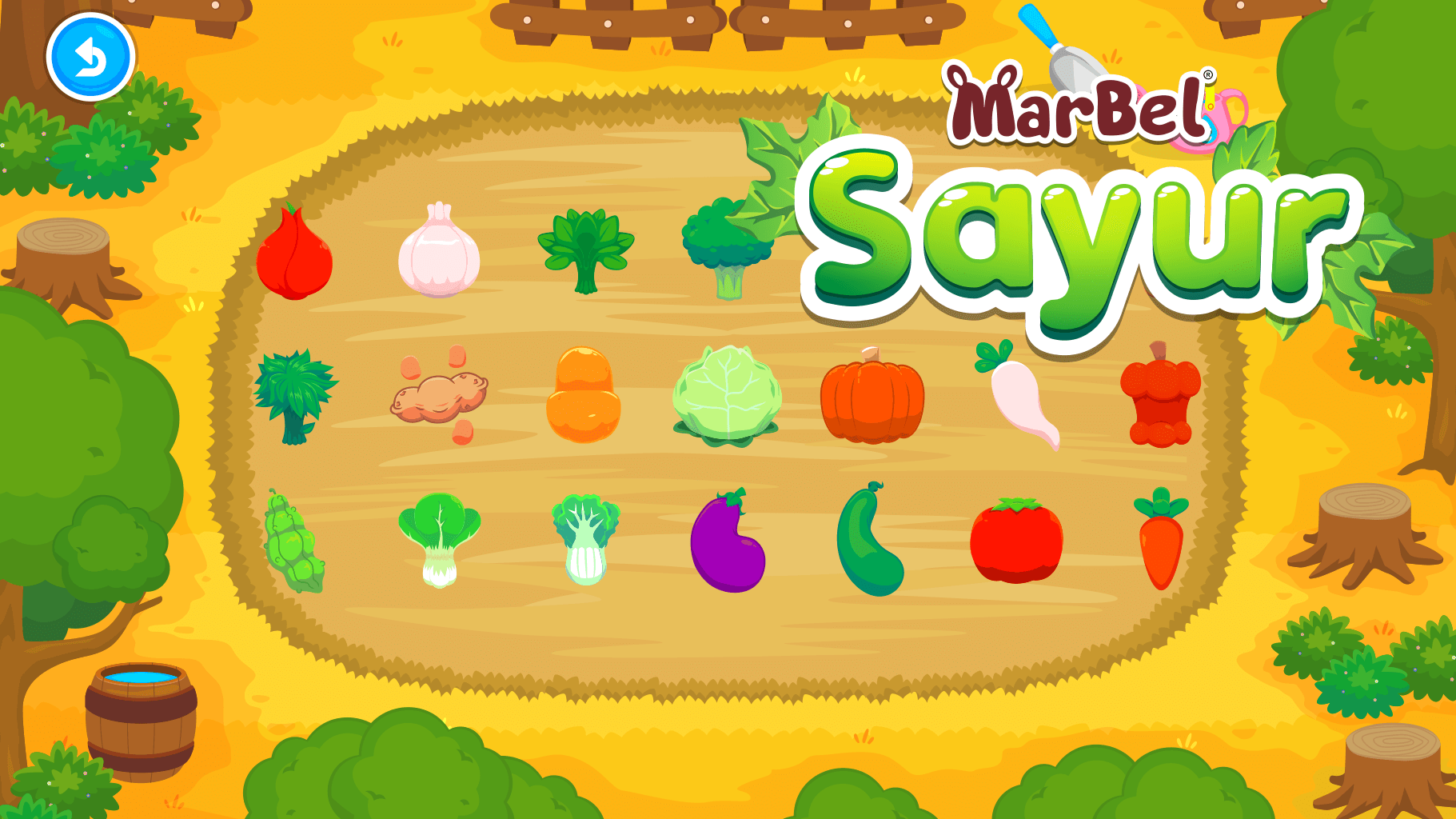
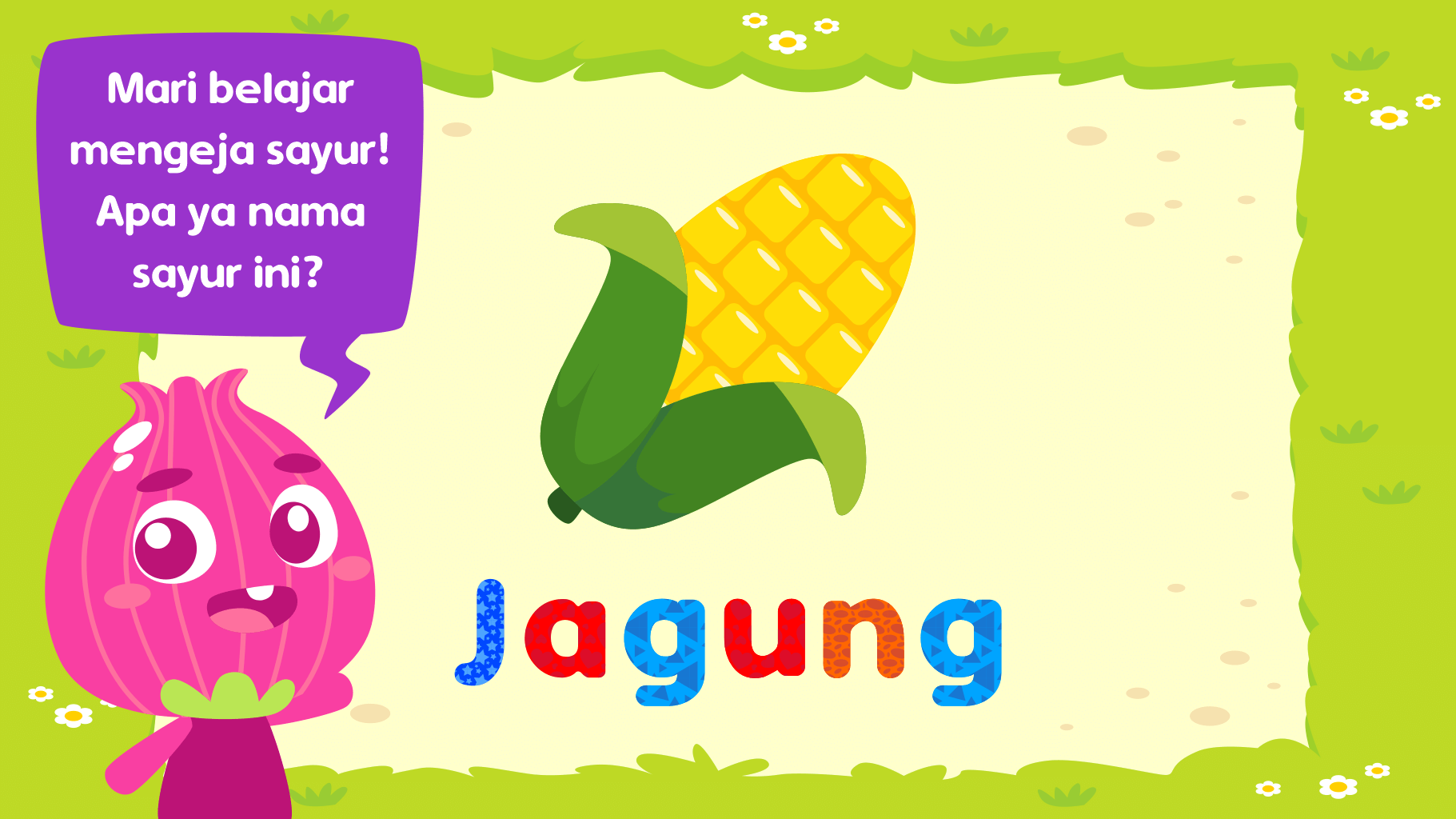
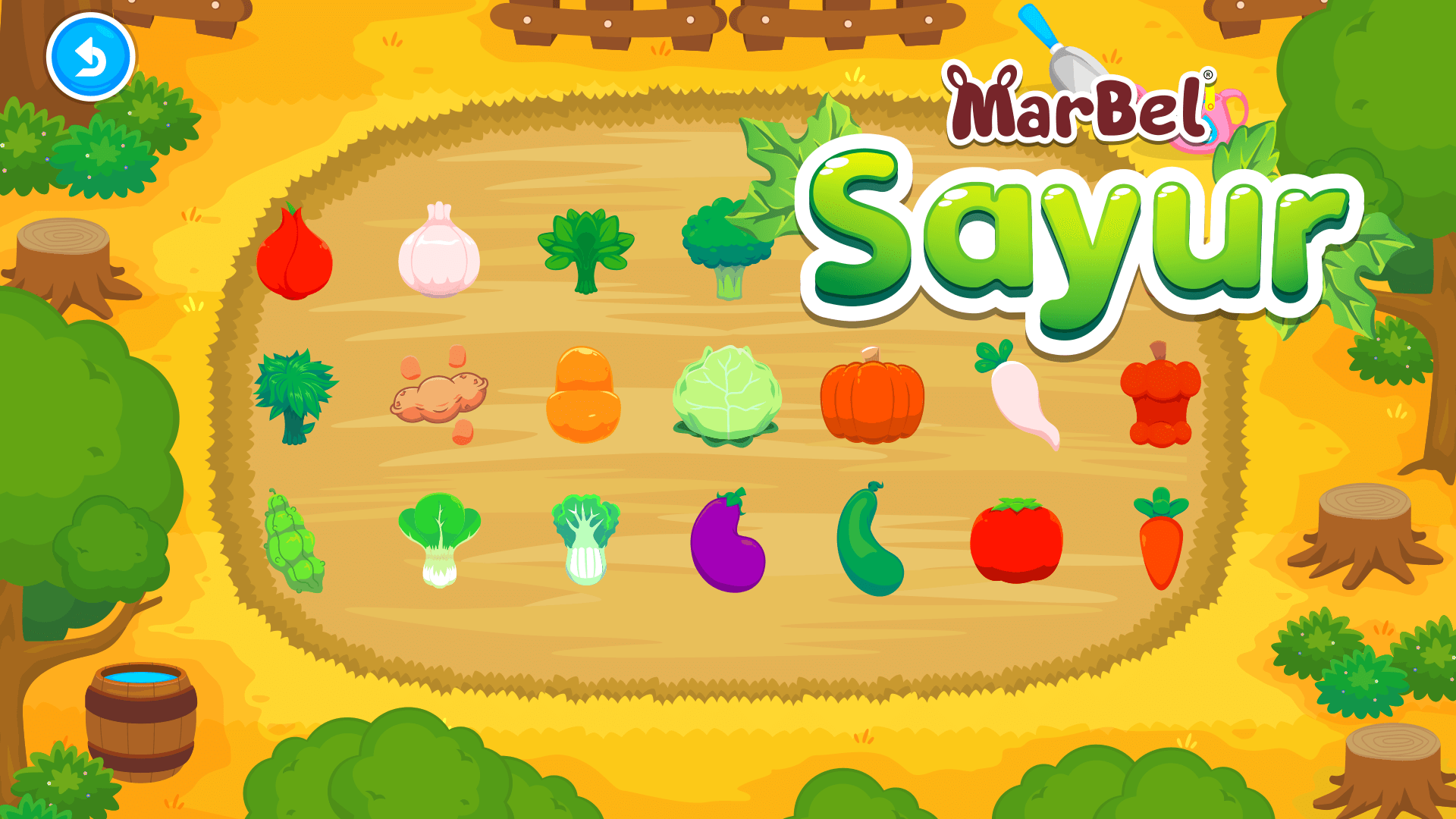
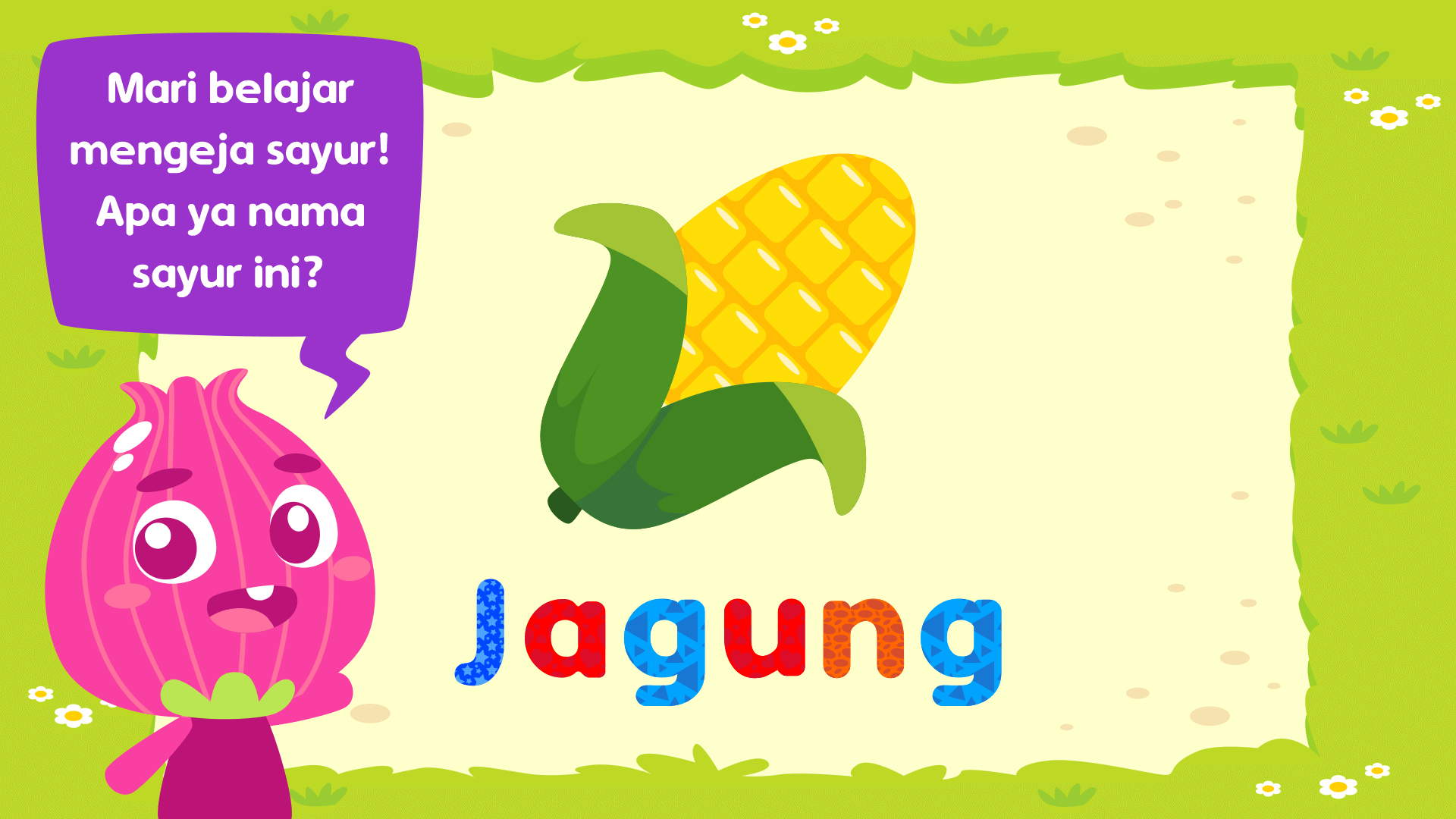
Wow, there are so many adorable vegetables in MarBel's garden! They are organized by their initial letters. J for corn, K for kale—what comes next for L? Discover with MarBel and complete the activities to earn a new trophy!
SPELL NAME
Want to learn how to spell vegetable names with MarBel? It will certainly be more enjoyable! B-A-Y-A-M stands for spinach! Try to spell the name of another vegetable!
PLAY EDUCATIONAL GAMES
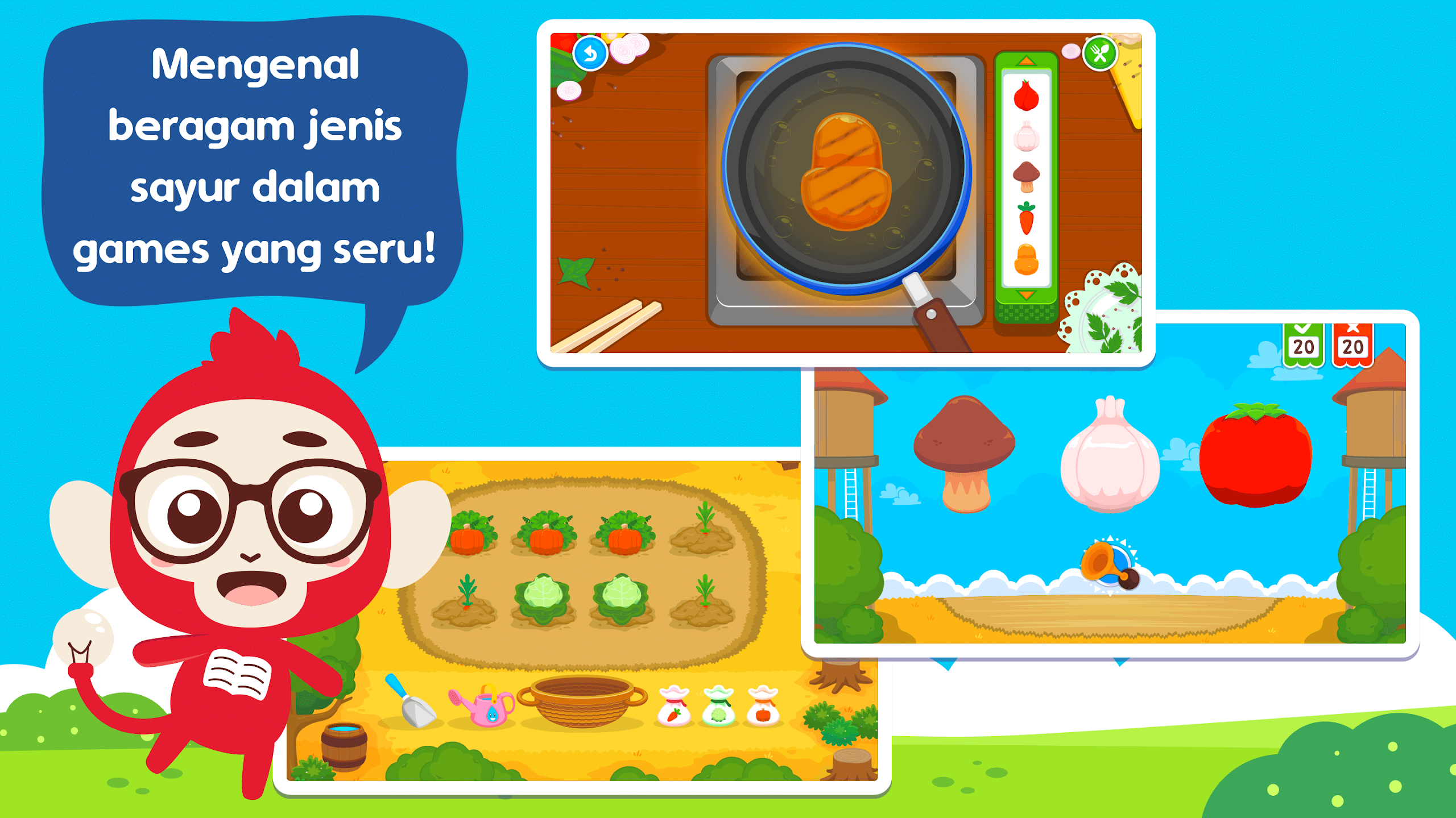
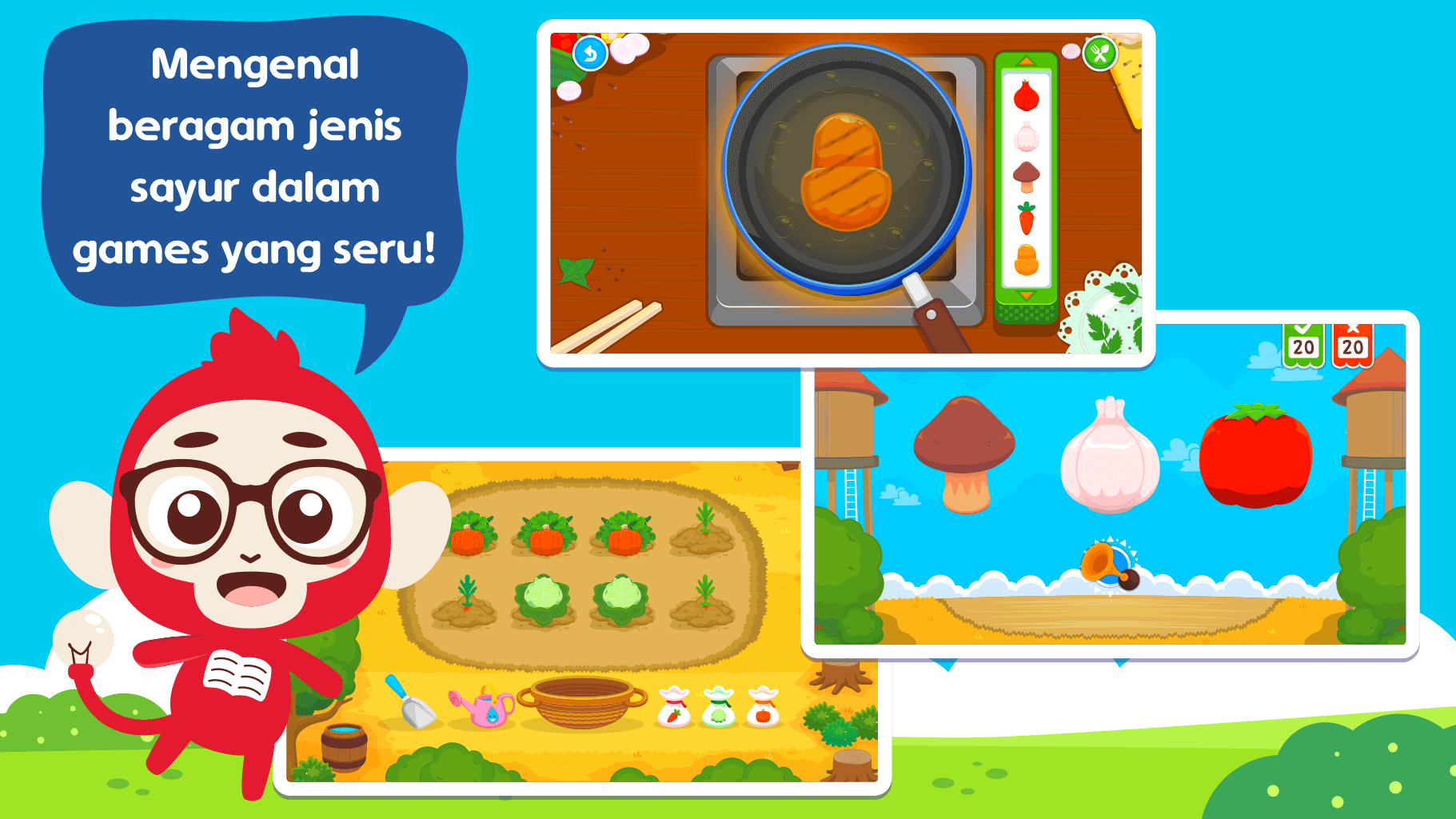
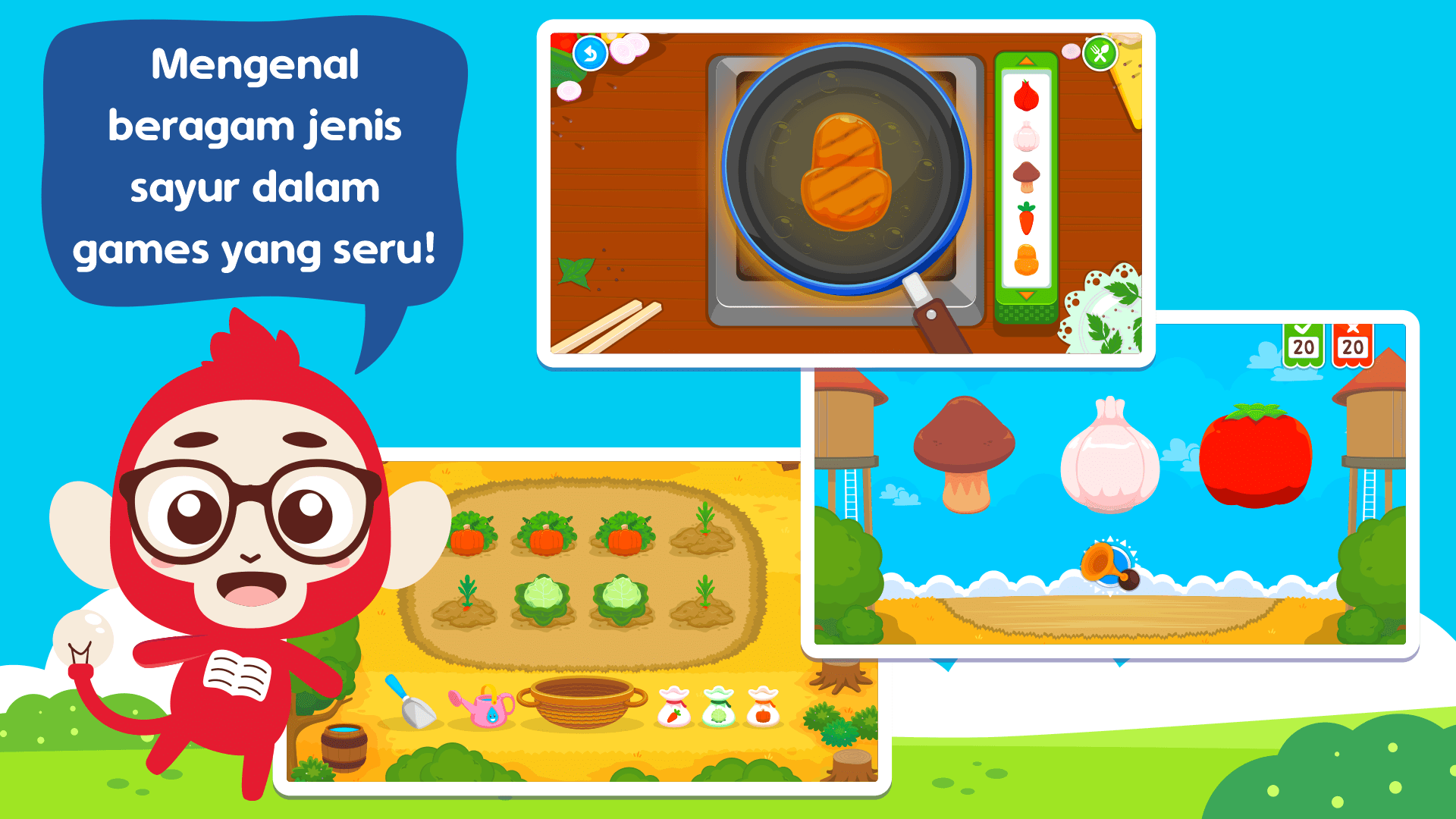
Look who’s in the MarBel garden—it's Milo! He invites everyone to join in the fun! With Milo, there are a variety of engaging games centered around vegetables. How exciting!
The MarBel app features images, animations, and audio narration, making it easier for children to learn numerous concepts. So, what are you waiting for? Download MarBel now for enjoyable and effortless learning!
Gameplay Tips:
Basic Learning Module Tips
- **"Learn Vegetables" Module**: When learning vegetables alphabetically, guide children to first observe the characteristics of the vegetables (color, shape, etc.) in the picture, then memorize the names based on the audio. For example, when seeing "corn," focus on its yellow and granular texture to reinforce their memory. When completing the corresponding activity, let children first attempt to recall the name independently, then complete it with prompts to enhance their sense of accomplishment.
- **"Spell Name" Module**: Before spelling the vegetable name, have children read the word several times along with the audio to familiarize themselves with the pronunciation before breaking it down into letters. For example, when spelling "spinach," first pronounce the word correctly, then memorize the corresponding "B-A-Y-A-M" sequence. Repeated reading and spelling practice can strengthen memory.
Game Module Tips
- **Picture Puzzles in "Play Educational Games"**: Observing details in the picture is key, such as the local characteristics of the vegetable (leaf shape, fruit size, etc.), and then linking them to previously learned vegetable knowledge. If unsure, eliminate obvious mismatches to narrow the list.
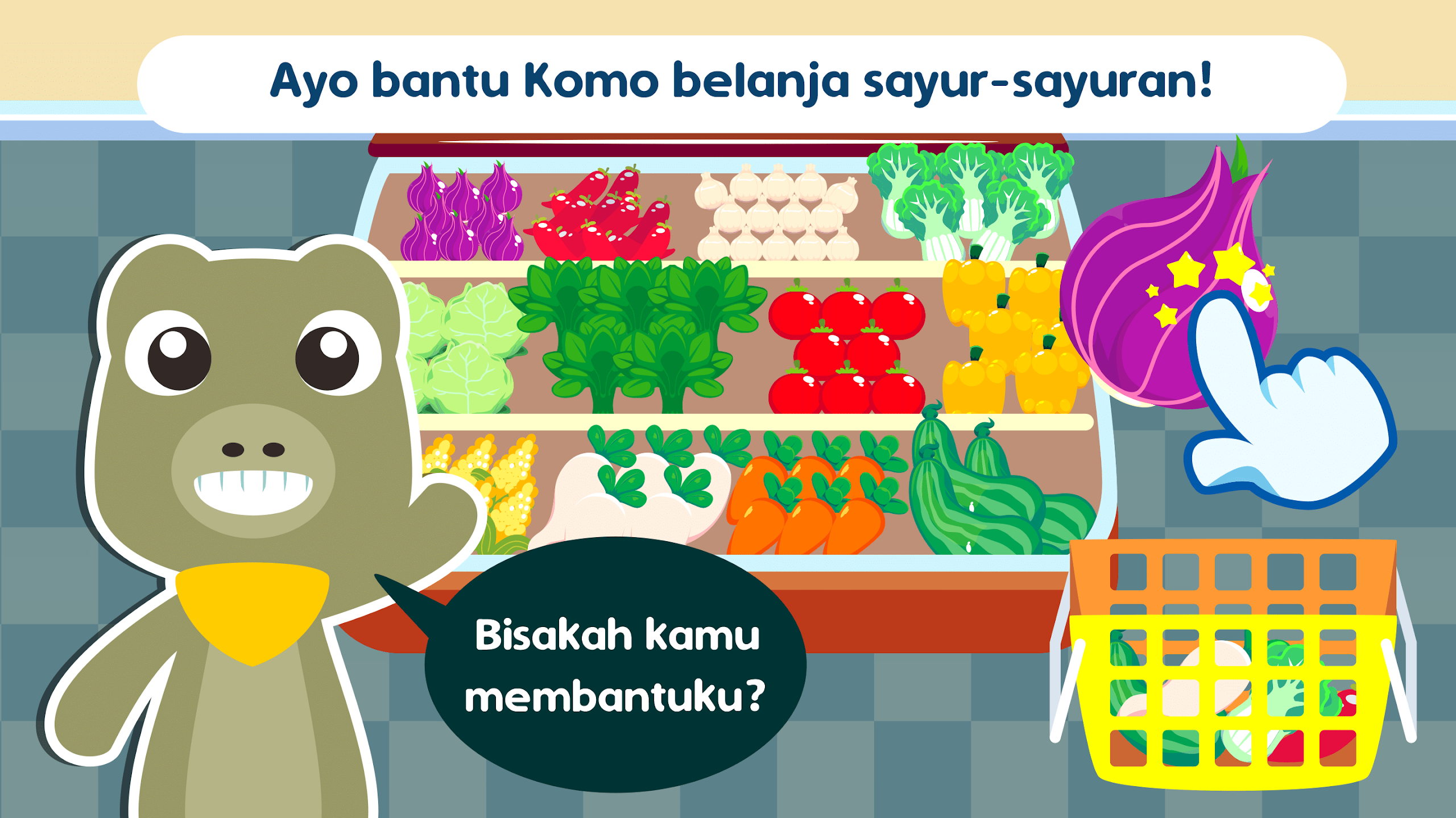
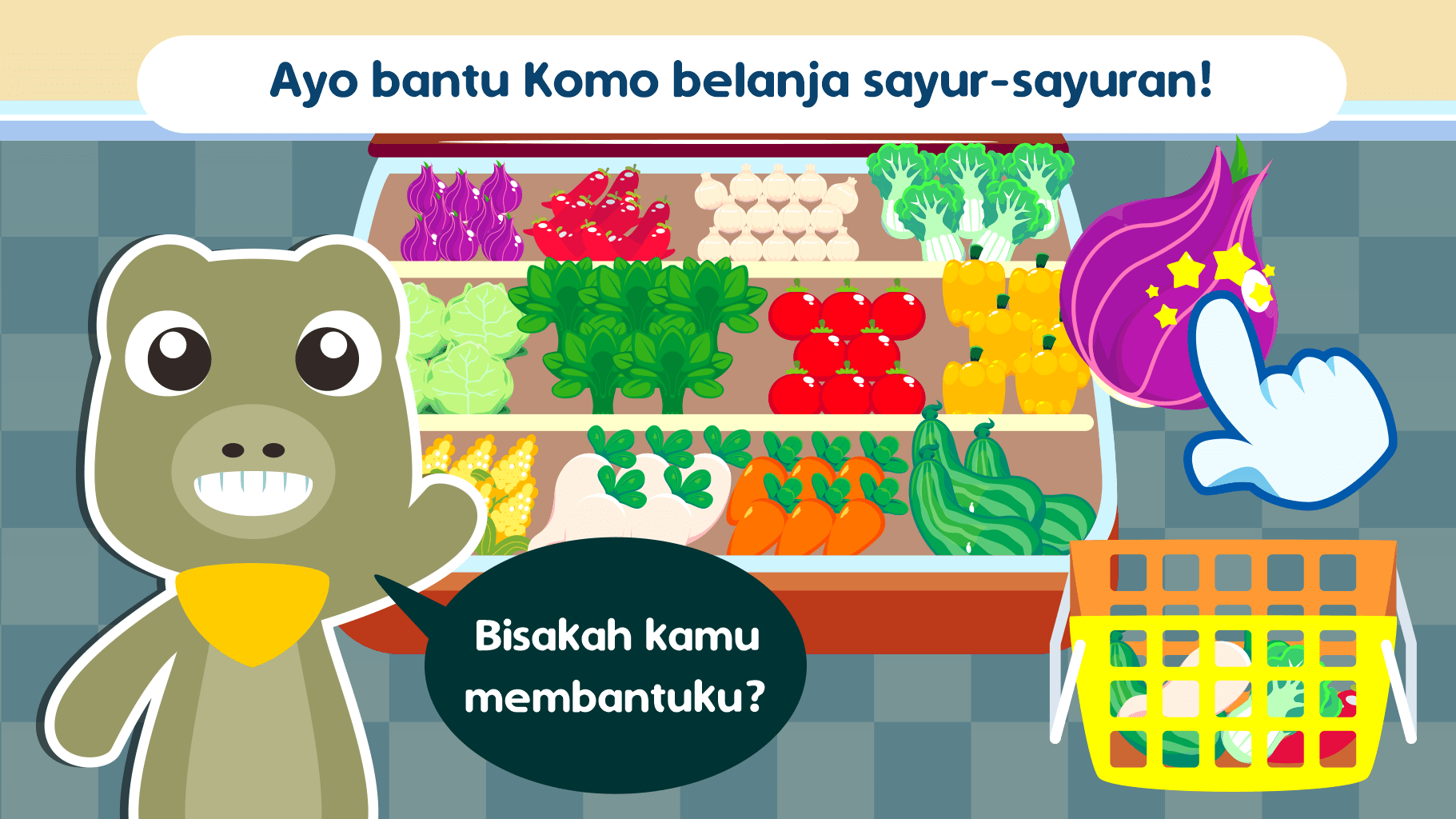
- **"Vegetable Shopping" Game**: Familiarize children with the names and appearances of different vegetables in advance. When shopping, search for them one by one according to the task list to develop observation and classification skills. For example, if "kale" is on the list, guide children to find the one with green leaves and wrinkled edges among the many vegetables.
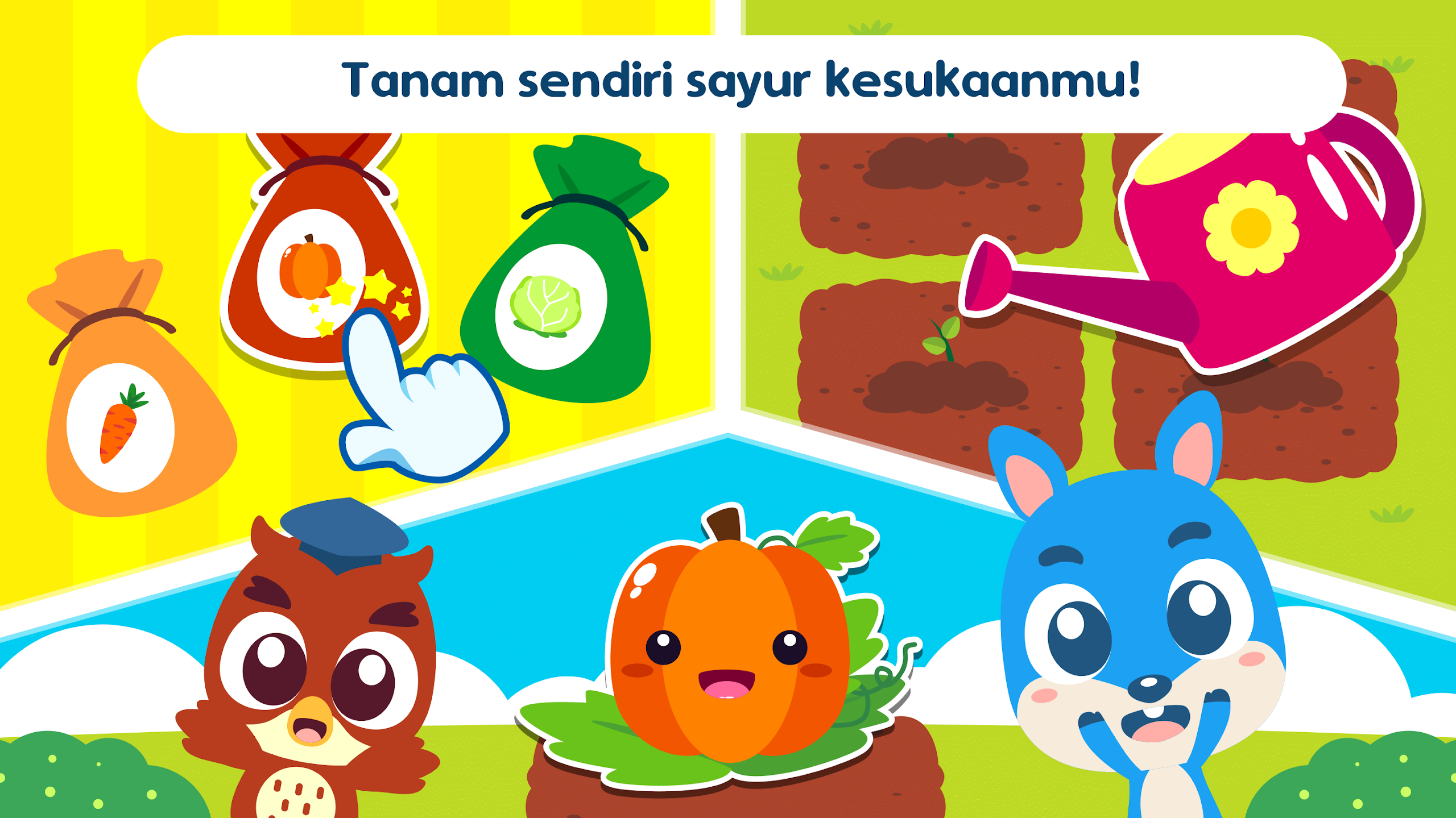
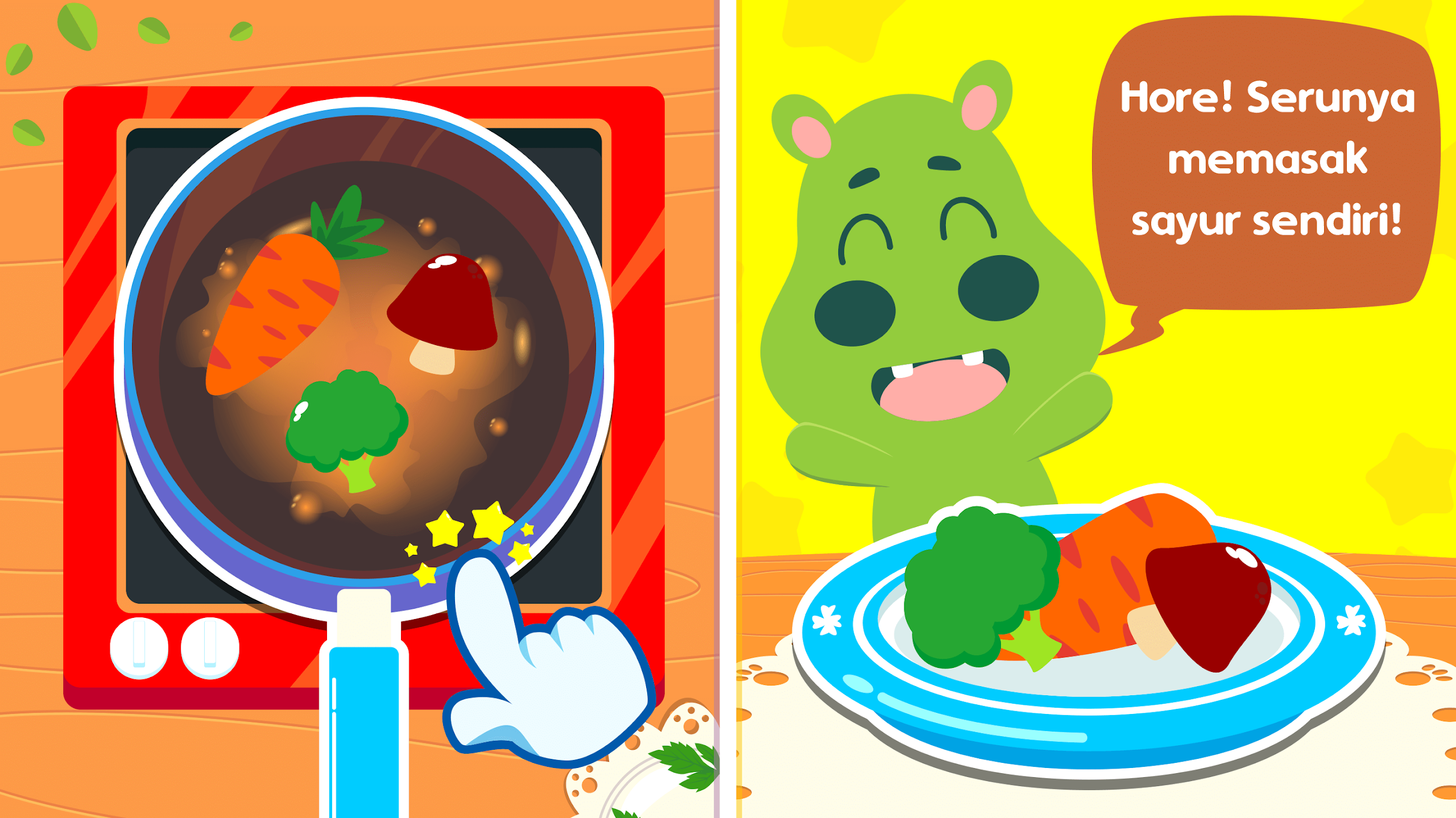
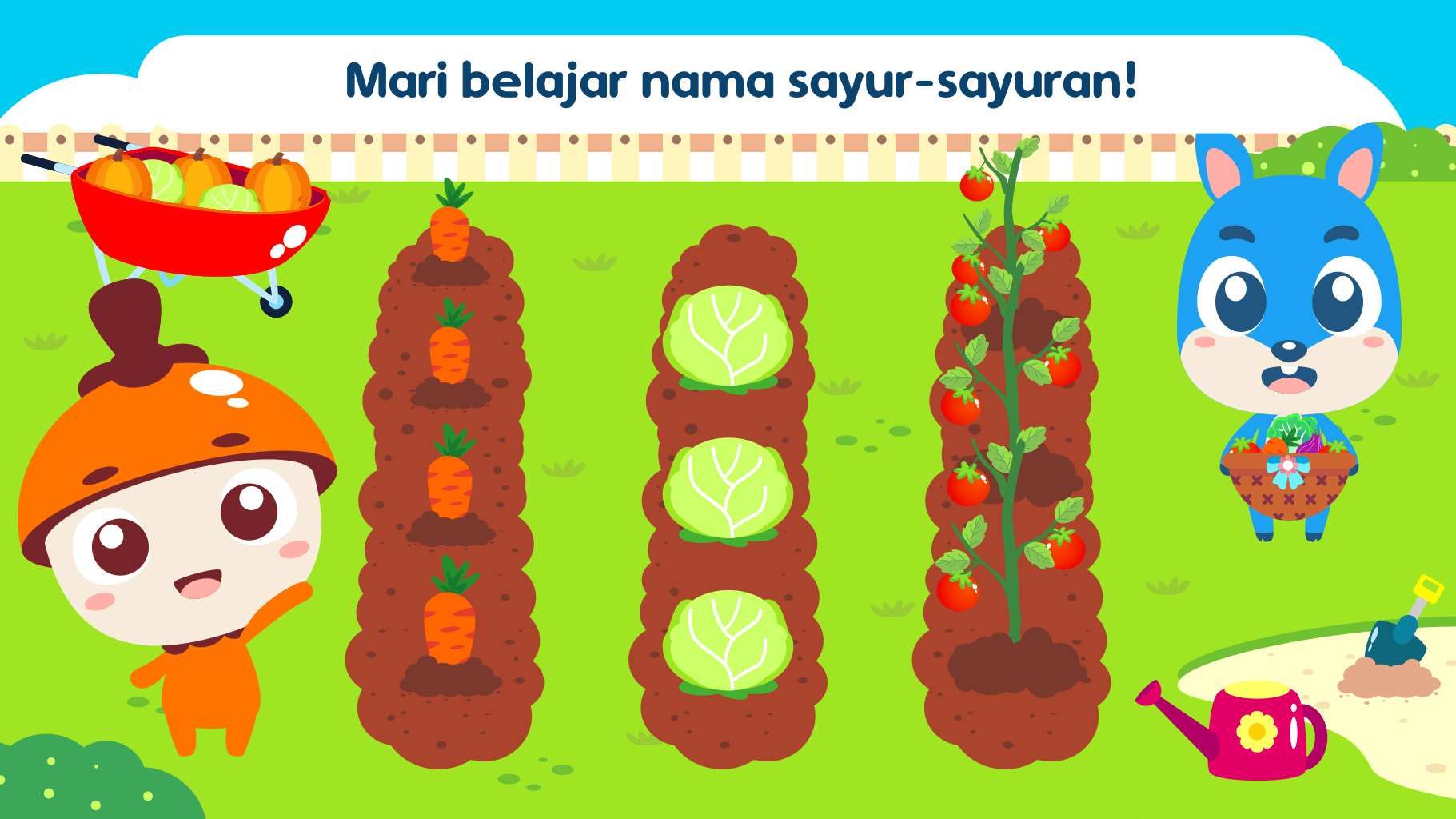
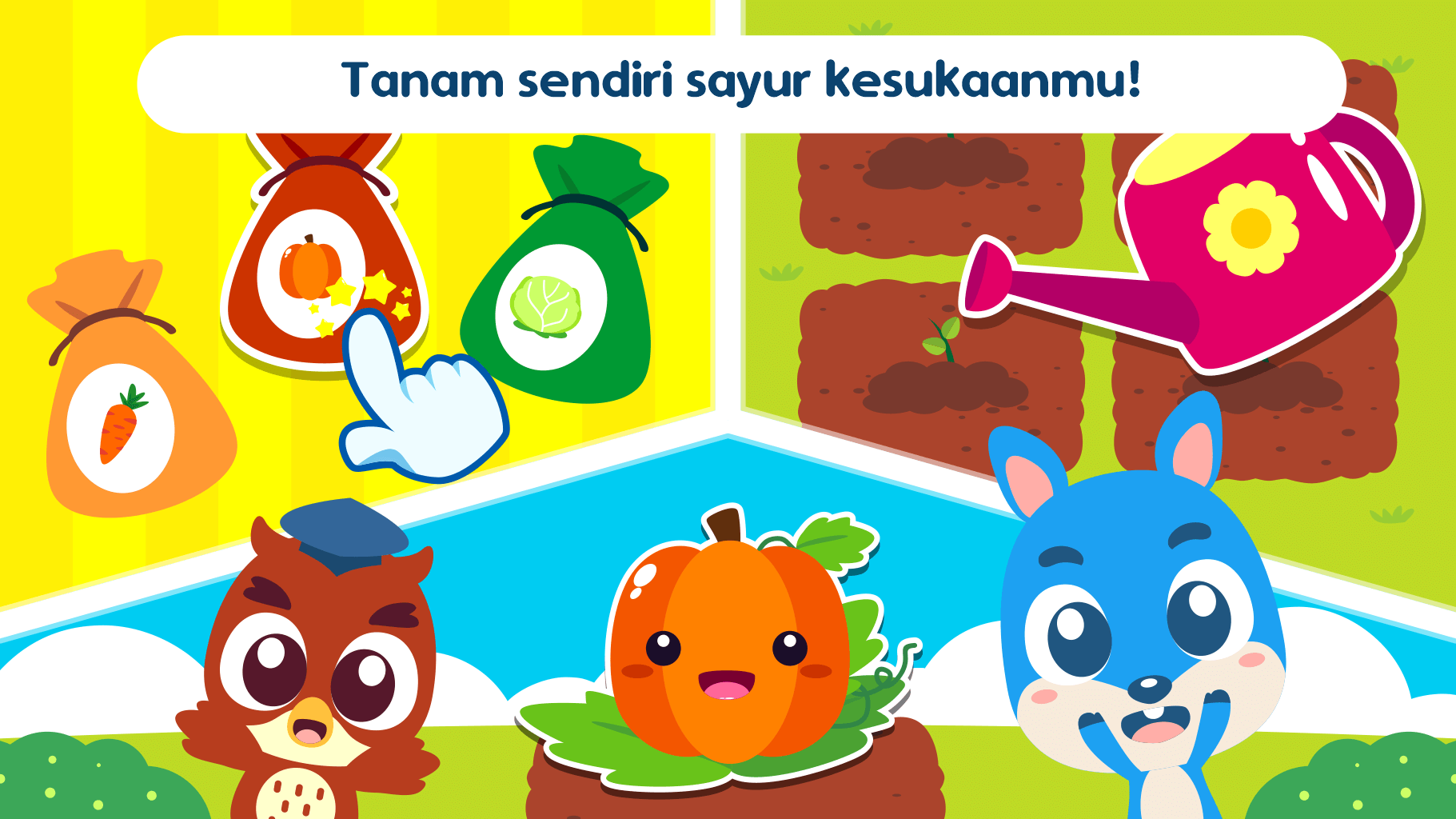
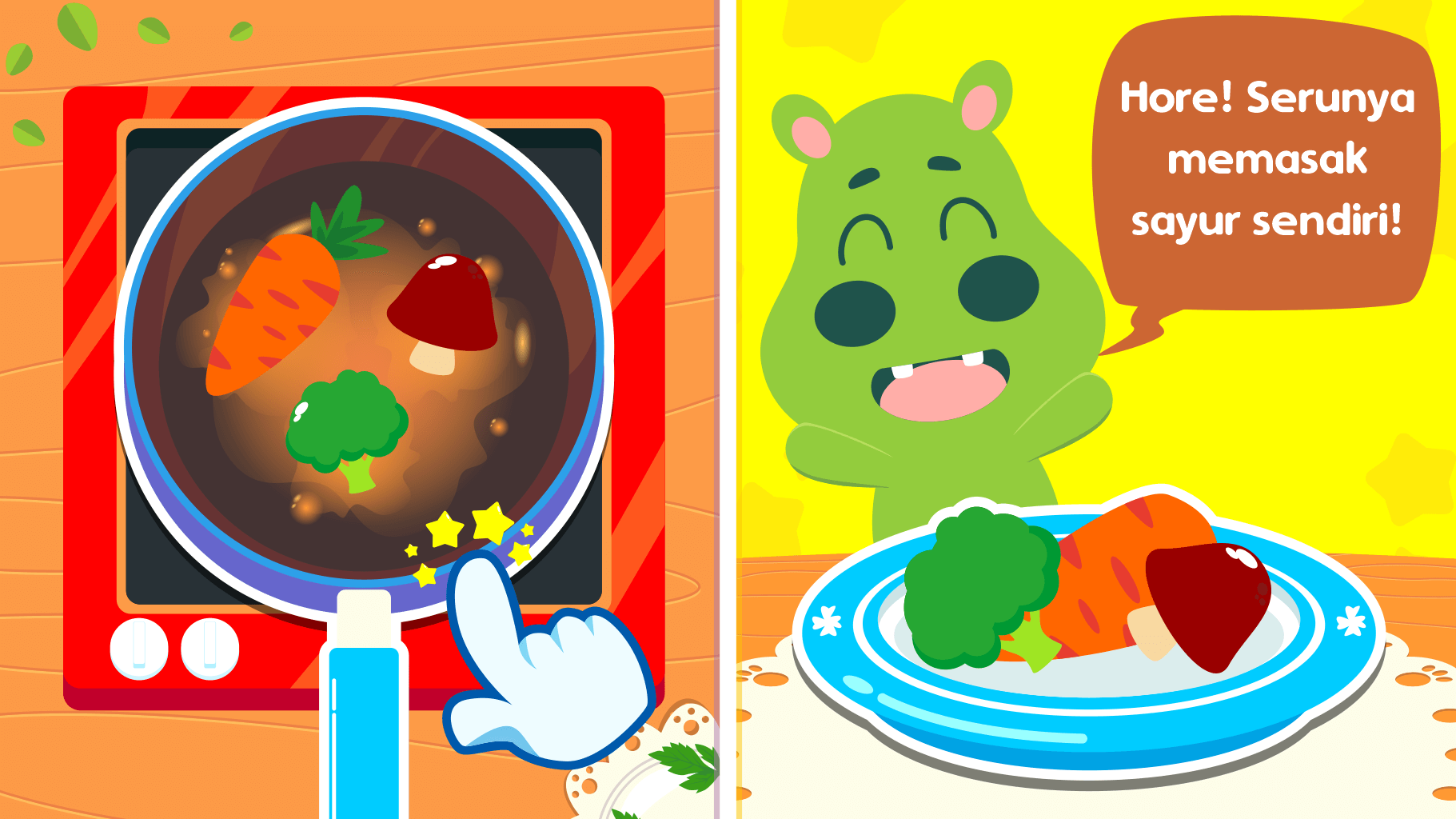
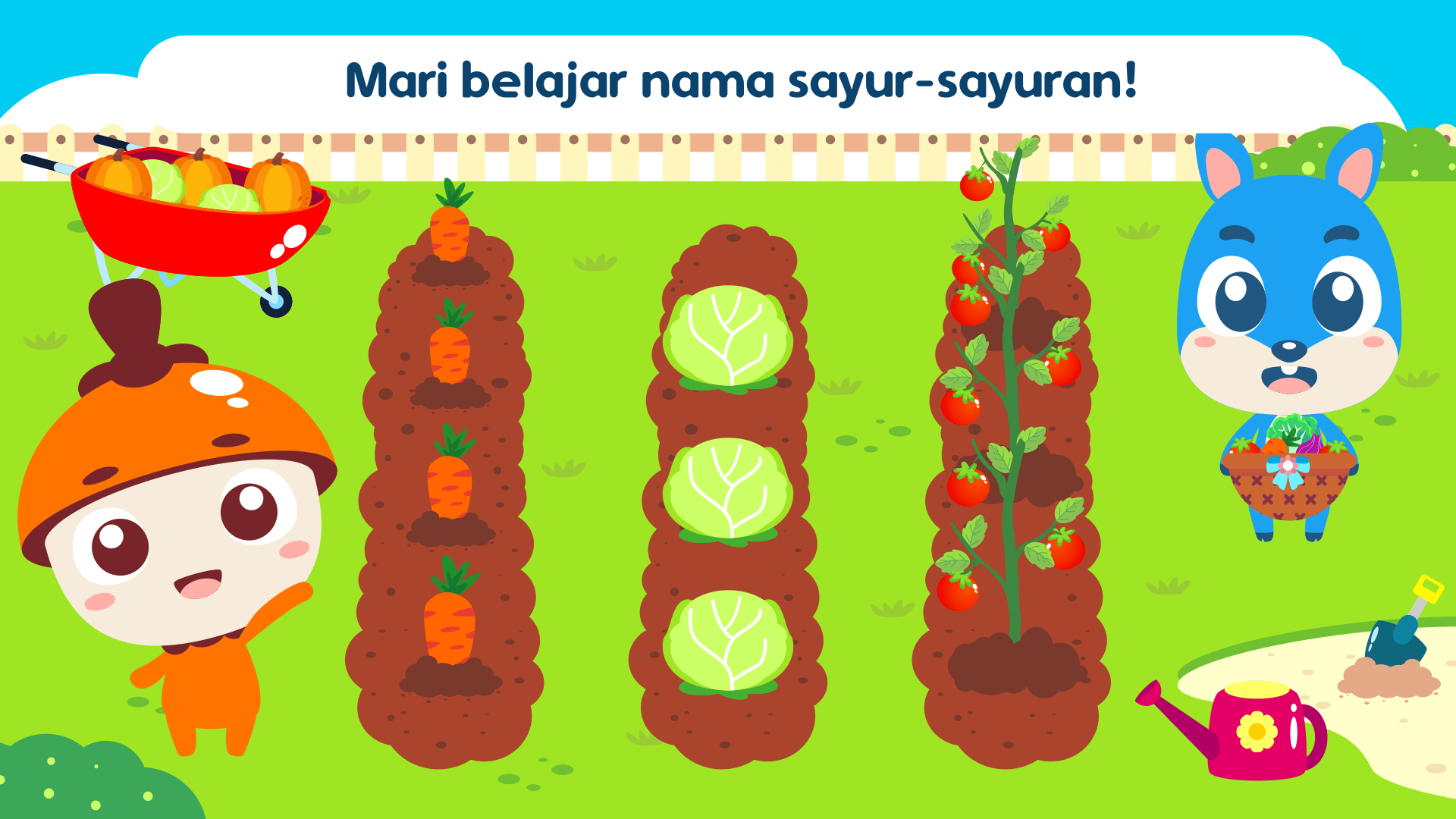
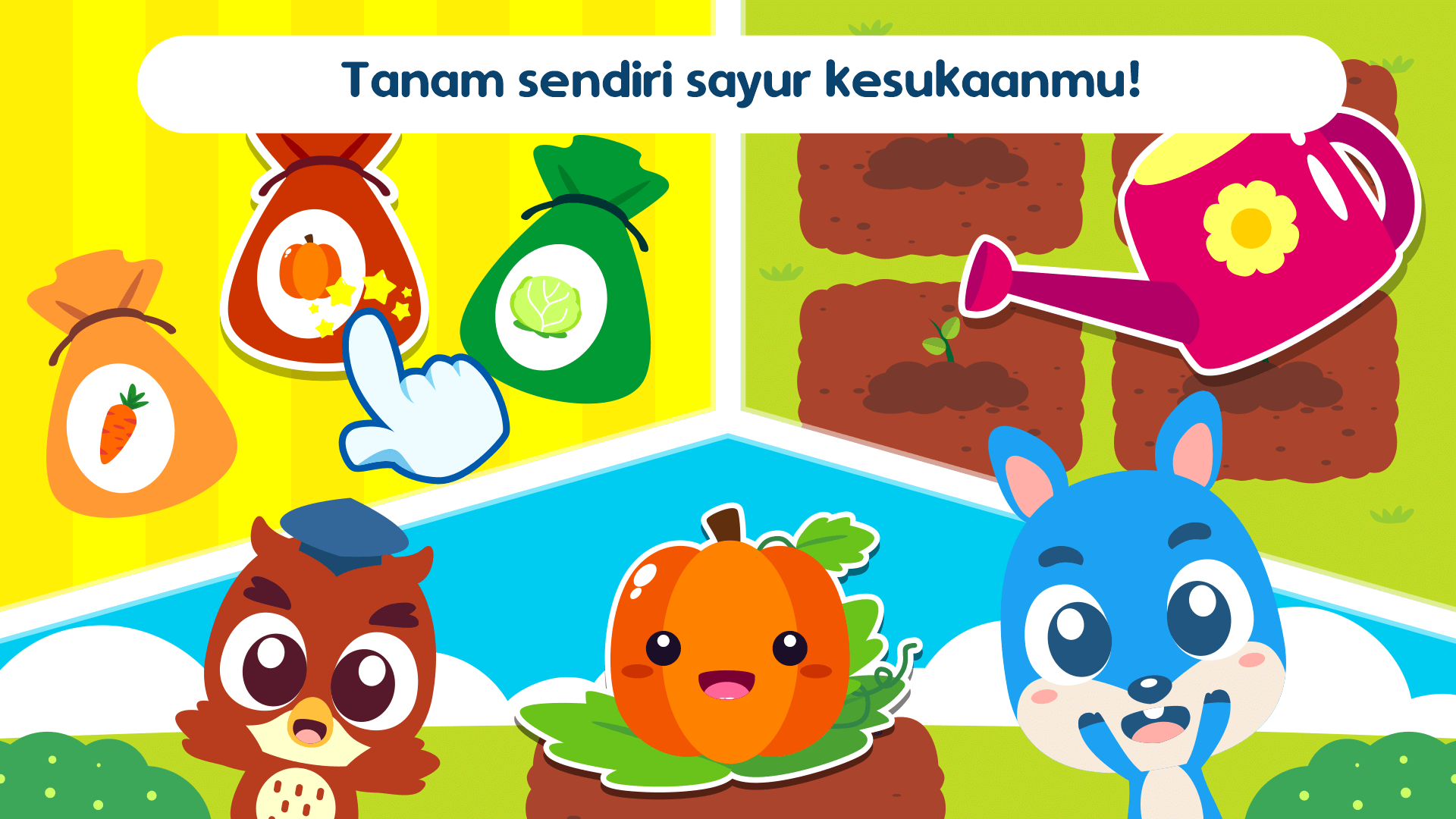
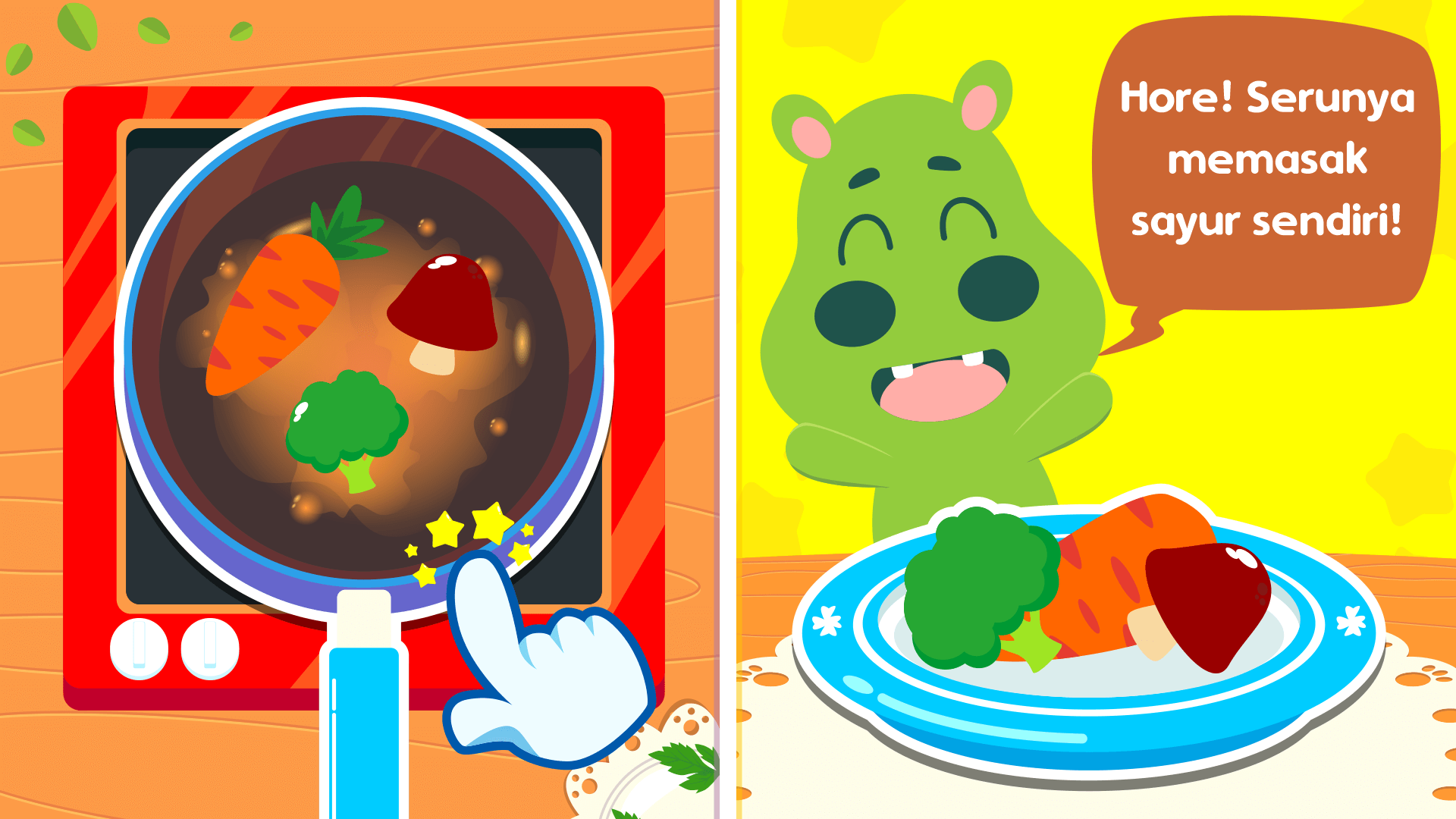
- **"Cooking Together" and "Gardening Together"**: These two modules focus on interactive experiences. Parents can accompany their children and explain the vegetable growth process or cooking tips while playing. For example, "When gardening, vegetables need water and sunlight to grow." This allows children to expand their learning through play.
General Tips
- Use audio and animation: Let children listen to the pronunciation of vegetable names and watch animations to stimulate their auditory and visual senses and help them remember.
- Progressive Learning: Start with vegetables that children are familiar with (such as carrots and tomatoes), and gradually introduce less common varieties to reduce the learning difficulty.
- Encourage children promptly: Give them affirmation and praise when they spell, guess the picture correctly, or successfully complete a task to strengthen their interest in learning and their confidence.
FEATURES:
- Learn the names of vegetables
- Spell the names of vegetables
- Play picture guessing games
- Quick and precise gameplay
- Let's go vegetable shopping!
- Cook vegetables together
- Let's garden together!
About MarBel:
MarBel, which stands for Let's Learn While Playing, is a series of Indonesian Language Learning Applications that are interactively designed to engage and teach Indonesian children. Created by Educa Studio, MarBel has achieved 43 million downloads and has been recognized with both national and international awards.

FAQs:
1. **Q: How can children memorize vegetables faster?**
A: First, look at the color and shape characteristics, then memorize the names while listening to the audio; start with familiar vegetables.
2. **Q: What are some tips for spelling vegetable names?**
A: Read along with the audio several times to familiarize yourself with the pronunciation, then break down the letters and spell them, practicing repeatedly.
3. **Q: How can I make it easier to pass puzzles and picture guessing games?**
A: Observe the details of the vegetables (leaves, shape, size), and eliminate obviously wrong options first.
4. **Q: What are some tips for vegetable shopping games?**
A: Memorize the appearance and names of the vegetables in advance, find them one by one according to the list, and improve observation and classification skills.
5. **Q: How can cooking and planting games be played more effectively for learning?**
A: Parents should accompany their children while playing and explaining, helping them understand the growth process and simple common sense.
- Version3.0.5
- UpdateSep 30, 2026
- DeveloperEduca Studio
- CategoryEducation
- Requires AndroidAndroid 4.0.1 – 4.0.2+
- Downloads215K+
- Package Namecom.educastudio.marbelsayur
- Signaturee4979a0ea444fc5cb4928c242b2e0863
- Available on
- ReportFlag as inappropriate
-
NameSizeDownload
-
16.10 MB
-
16.45 MB

















The content is engaging and tailored to young children's cognitive needs.
Both educational and entertaining.
Simple operation makes it suitable for independent exploration.
The subject matter is relatively limited, and the knowledge coverage is relatively narrow.
This product may require parental supervision for maximum educational effectiveness, and may have limitations for young children who wish to use it independently.